15 Ng. 100 Đ. Nguyễn Xiển, Thanh Xuân Nam, Thanh Xuân, Hà Nội 100000

15 Ng. 100 Đ. Nguyễn Xiển, Thanh Xuân Nam, Thanh Xuân, Hà Nội 100000
The Ho Chi Minh Trail is arguably the most legendary road in Southeast Asia. Once a clandestine network of jungle paths, mountain passes, and river crossings used by North Vietnamese forces during the American War, it has today been reclaimed by nature and history to become a world-class cycling destination. For the modern adventurer, embarking on a Ho Chi Minh Trail war history cycling expedition is not just about the physical challenge of traversing 2,000 kilometers; it is a profound journey through a landscape that has transitioned from a theater of conflict to a corridor of peace, resilience, and breathtaking natural beauty.
At Golden Trail Travel, we understand that a journey of this magnitude requires more than just a bike and a map. It requires local expertise, logistical precision, and a deep respect for the history that defines the Truong Son mountain range. Our professionally curated cycling tours are designed to provide an immersive experience that balances physical achievement with cultural discovery.
.jpg)
To appreciate the significance of Ho Chi Minh Trail war history cycling, one must understand its historical weight. During the conflict, the trail was a logistical masterpiece, spanning over 16,000 kilometers through Vietnam, Laos, and Cambodia. It was the "Blood Vessel of the Nation," allowing for the movement of troops and supplies hidden beneath a triple-canopy jungle that shielded it from aerial reconnaissance.
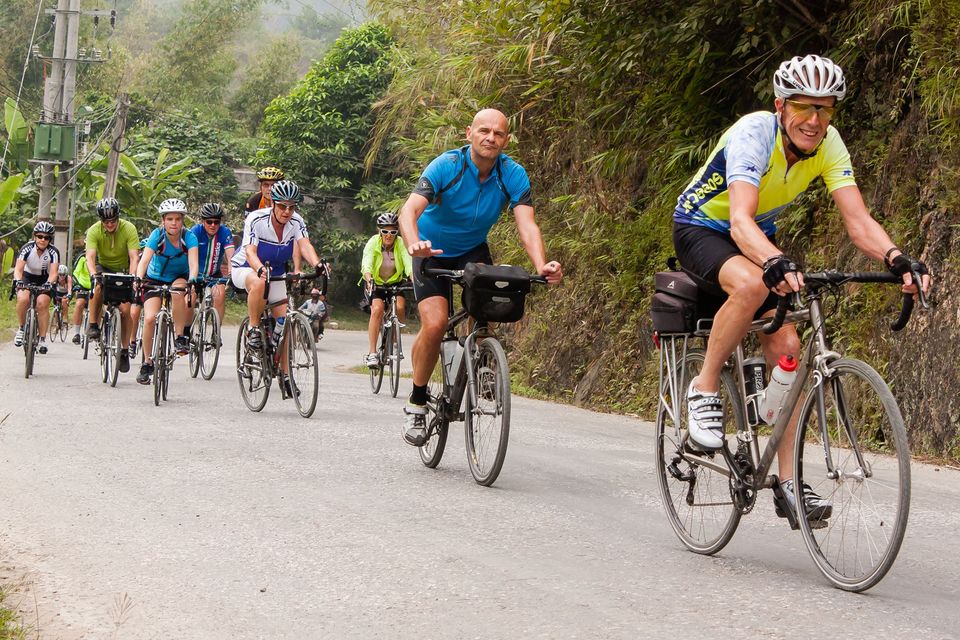
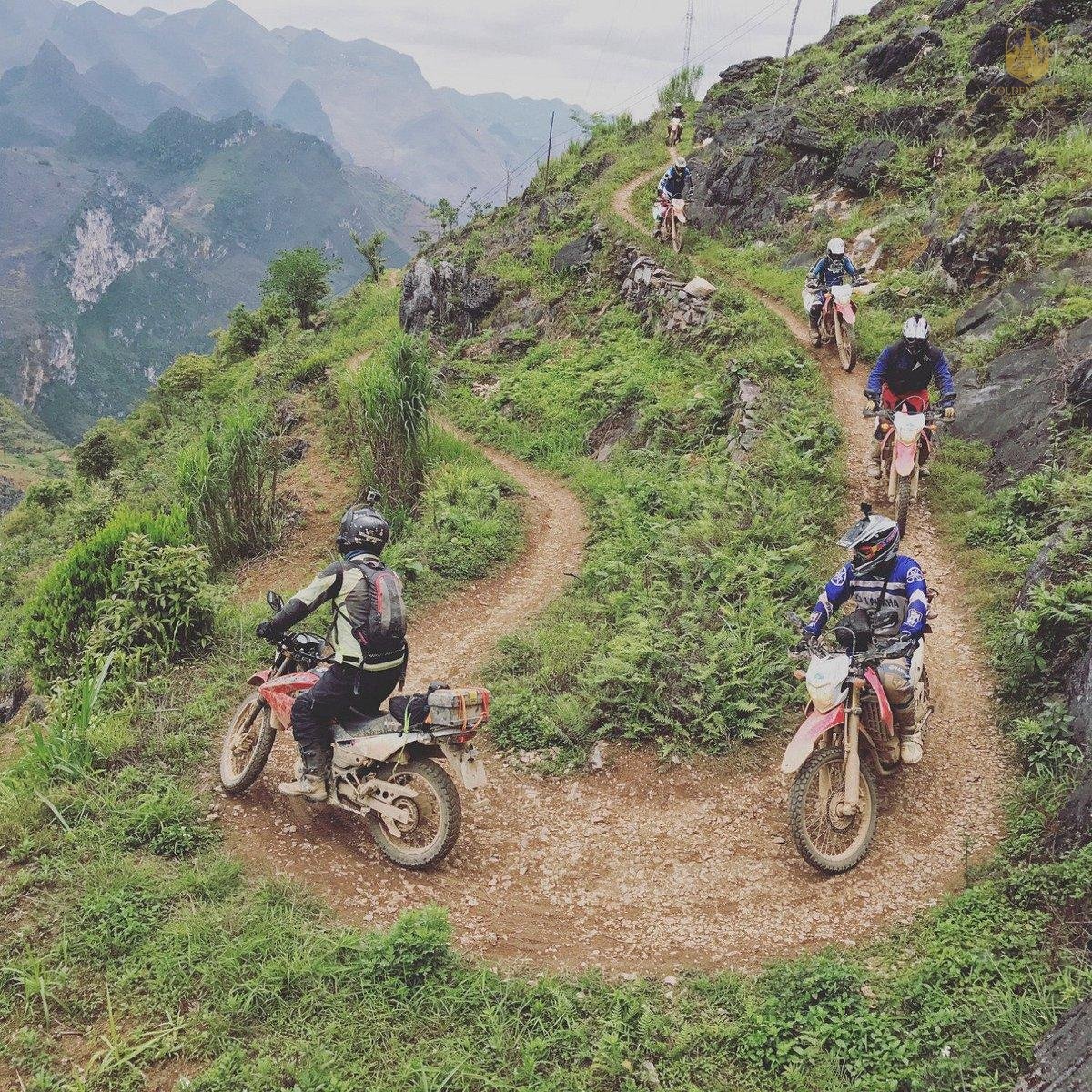
Today, the modern Ho Chi Minh Highway (mostly QL15 and QL14) largely follows the spine of the original trail. For cyclists, this means navigating through the same misty valleys and over the same soaring passes once traversed by soldiers and supply convoys. Every pedal stroke is an echo of resilience, and every summit reached provides a panoramic view of a nation reborn.
Unlike a bus tour that zips past monuments, cycling allows you to "feel" the history. You feel the humidity of the jungle, the steepness of the passes that supply porters once climbed on foot, and the silence of the remote valleys. It is a sensory connection to the past that only "slow travel" can provide.
Many of the trail's most significant war remnants are tucked away in remote areas where large vehicles cannot easily reach. Cycling gives you the mobility to stop at a moment's notice—to explore an old firebase, visit a hidden cave used as a hospital, or pay respects at a quiet martyr's cemetery along the roadside.
The Truong Son range is home to many ethnic minority groups, such as the Bru-Van Kieu and the Paco, who played a vital role in maintaining the trail. Cycling into their villages provides a level of intimacy and interaction that is impossible to replicate in mainstream tourism.
Our journey often begins near Phong Nha-Ke Bang National Park. During the war, this karst landscape was a vital logistical hub. The gargantuan caves were used as bomb shelters for trucks and soldiers.
Must-See: The Eight-Lady Cave (Hang Tam Co) and the Xuan Son Ferry, critical crossing points that were heavily contested.
Quang Tri was the most heavily bombed province in human history. Here, the trail intersects with the Demilitarized Zone (DMZ).
Khe Sanh Combat Base: Perched on a high plateau, this site was the stage for one of the most famous sieges of the war. Cycling up the steady incline to the base allows you to reflect on the scale of the conflict.
Vinh Moc Tunnels: A subterranean village where civilians lived for years to escape the bombardment. Our guaranteed tours ensure you have the time to explore these engineering marvels in depth.
This is arguably the most spectacular segment of Ho Chi Minh Trail war history cycling. This remote stretch of tarmac winds through primary rainforest with almost zero vehicular traffic.
The Experience: Total solitude and pristine nature. You cross "Heaven’s Gate" passes that offer views stretching all the way to the Laotian border.
Moving further south, the trail climbs into the high plateaus. This was the site of the "Central Highlands Campaign."
Dak To and Tan Canh: Locations of fierce battles where the trail branched into Cambodia.
The Terrain: Rolling hills and red basalt soil—perfect for building endurance while passing through coffee and rubber plantations.
Cycling 2,000 kilometers through mountainous terrain requires more than just enthusiasm; it requires preparation.
While the modern highway is mostly paved, the steep gradients and occasional landslide debris require a versatile bike.
Hardtail Mountain Bikes: Our standard choice at Golden Trail Travel. They provide the gear range needed for the Truong Son passes and the comfort needed for long descents.
Gravel Bikes: Perfect for those who want speed on the tarmac sections but need the tire clearance (38mm+) for the rugged connectors.
The climbs on the Ho Chi Minh Trail can be relentless. We recommend a training regimen that includes back-to-back long rides and hill repeats. You should be comfortable with 70-100km days with at least 1,200 meters of elevation gain.
Hydration: The humidity in Central Vietnam is a major factor. You should carry at least 2 liters of water and use electrolyte tablets.
Apparel: High-quality padded shorts are essential. Because mountain weather is unpredictable, a lightweight, packable rain jacket is a must.
Protection: High-SPF sunscreen and UV-rated cycling jerseys are highly recommended.
Navigating the complexities of a war history tour requires expert logistics. This is where Golden Trail Travel excels.
Expert Support: Our team includes professional mechanics and English-speaking guides who are experts in Vietnam's wartime history.
The "Sag Wagon": Our support van follows the group at a distance. If you need a break, a cold drink, or a lift over a particularly brutal pass, we are there.
Community Impact: We prioritize staying in local guesthouses and eating at family-run eateries, ensuring your journey benefits the people of the Truong Son region.
Guaranteed Departures: Our guaranteed tours provide peace of mind. When we schedule a departure, it happens, allowing you to plan your travel with confidence.
Weather is a critical factor for Ho Chi Minh Trail war history cycling.
Best Window: February to May. The weather is dry, and temperatures are moderate across both the north and central regions.
Second Best: October to December (though expect some rain in the Central regions).
The Ho Chi Minh Trail is more than a road; it is a monument to human endurance. To cycle it is to witness the rebirth of a nation. It is a journey that will challenge you, humble you, and ultimately leave you with memories that last a lifetime.
Ready to claim your place in the history of the trail? Check out our latest cycling tours to find a departure date that fits your schedule and join a group of like-minded adventurers.
Q: Is it safe to cycle in the former war zones? A: Yes, it is very safe. All roads and established tourist sites have been cleared of unexploded ordnance (UXO). However, we always recommend staying on the road and following your guide's instructions.
Q: What is the average daily distance? A: Our tours typically cover between 60km and 90km per day, with plenty of stops for photos, coffee, and historical exploration.
Q: Can vegetarians and vegans be accommodated? A: Absolutely. Vietnamese cuisine is very adaptable, and we ensure that our local partners provide nutritious, delicious meals for all dietary requirements.
Q: Can I rent a professional bike from Golden Trail Travel? A: Yes. We offer a fleet of high-end mountain bikes and gravel bikes. Please check our cycling tours page for the current rental options.
Jennifer T. from Canada: "The Ho Chi Minh Trail war history cycling tour was the highlight of my year. The descent into Hue from A Luoi was one of the most beautiful rides I've ever done. Golden Trail Travel handled everything perfectly, and the bikes were in top shape."
Robert K. from Germany: "Brilliant organization. As a solo traveler, joining the guaranteed tour was the best way to meet people. The historical knowledge of our guide, Vinh, made the A Shau Valley come alive. 5 stars!"
Sarah & Mike from the UK: "Incredible experience. The hills were tough, but the support van was a lifesaver with cold water and fruit. Seeing the Paco villages and then ending in the beautiful city of Hue was the perfect combination of culture and adventure."


.jpg "The Epic Cycling Adventure: Rediscovering Your Soul on Two Wheels")
.jpg "The Ultimate Trekking Expedition: A Journey Beyond Boundaries")
.jpg "The Ultimate Guide to Trekking Cao Bang Vietnam: Journey Through the Realm of Mountains and Waterfalls")
.webp "Cuc Phuong National Park Day Trip")
.jpg "Pu Luong Nature Reserve: An Ethereal Journey into Vietnam’s Hidden Eden")