The Jewel of Khmer Art: Unveiling the Exquisite Beauty of Banteay Srey – Cambodia’s Citadel of Women
Beyond the Grandeur of Angkor: Discovering the Delicate Masterpiece of Pink Sandstone
While the colossal scale of Angkor Wat and the enigmatic faces of the Bayon often dominate the narrative of Cambodia's ancient Khmer Empire, there exists a temple of entirely different, yet equally profound, allure: Banteay Srey. Known affectionately as the "Citadel of Women" or "Banteay Srei" (its Khmer name), this diminutive yet exquisitely carved 10th-century temple stands as a testament to the unparalleled artistry and delicate craftsmanship of Khmer sculptors. Located approximately 35-40 kilometers northeast of Siem Reap, its journey takes you through picturesque rural landscapes, culminating in the discovery of a true architectural jewel.
What sets Banteay Srey apart is not its size, but its remarkable preservation, its unique use of vibrant pink sandstone, and the astounding intricacy of its bas-reliefs. These carvings, depicting mythological scenes and celestial beings, are so finely detailed and deeply cut that they appear almost three-dimensional, earning the temple its reputation as the "jewel in the crown of Khmer art." It predates many of the grander Angkorian structures, offering a glimpse into an earlier, more refined aesthetic, and standing as a testament to the private patronage that shaped the empire's religious landscape. For those seeking a more intimate, artistically focused encounter with Cambodia's ancient wonders, Banteay Srey is an indispensable pilgrimage.
In this comprehensive guide, we will embark on an immersive exploration of Banteay Srey. We'll delve into its fascinating history, its unique origins, the unparalleled beauty of its pink sandstone architecture, and the profound stories etched into its delicate carvings. Furthermore, we’ll provide you with all the practical information you need to plan your artistic pilgrimage, including how Golden Trail Travel can seamlessly facilitate your discovery of this captivating and adventurous Cambodian treasure, ensuring a journey that is both insightful and truly unforgettable.
A Jewel in the Jungle: History and Patronage of Banteay Srey
Banteay Srey’s history is as distinctive as its architecture, setting it apart from the grand state temples built by kings. Its origins lie in the private devotion of a royal Brahmin, and its rediscovery in the 20th century adds a layer of dramatic intrigue.
The 10th Century Masterpiece: Pre-Angkor Wat Origins
Banteay Srey was consecrated in 967 CE, making it significantly older than the major complexes of Angkor Wat (12th century) and Angkor Thom (late 12th/early 13th century). This places it during a period of relative peace and artistic prosperity, following the reign of King Rajendravarman II and leading into the reign of King Jayavarman V. Its age contributes to its unique stylistic qualities, reflecting a mature yet distinct phase of Khmer art.
A Temple of Private Devotion: The Brahmin Patron
Perhaps the most unique aspect of Banteay Srey's origin is that it was not commissioned by a reigning king as a state temple, but by a high-ranking Brahmin minister and spiritual advisor named Yajnavaraha.
-
Yajnavaraha: He was a counselor to King Rajendravarman II and a guru to King Jayavarman V. His decision to build a temple was an act of personal piety and merit-making, rather than a political statement of devaraja (god-king) cult. This private patronage allowed for a focus on exquisite artistic detail and a smaller, more intimate scale.
-
Family Connection: The temple was likely built for the spiritual merit of Yajnavaraha's family and dedicated to Hindu deities, specifically Shiva and Vishnu, reflecting the prevalent syncretism of the time. The temple's original name was Tribhuvanamaheshvara, meaning "Great Lord of the Threefold World," a title for Shiva.
-
Royal Endorsement (Later): While privately built, the temple did receive official recognition and endowments from King Jayavarman V, signifying its importance and the high regard in which its patron was held.
Religious Dedication: Shiva and Vishnu
While its initial dedication was primarily to Shiva (as Tribhuvanamaheshvara), Banteay Srey also features prominent iconography of Vishnu and Brahma, reflecting the Hindu Trimurti (triad of supreme divinity). The three main central towers were likely dedicated to Shiva, Vishnu, and Brahma, or perhaps two to Shiva (one with a lingam) and one to Vishnu. This dual dedication further showcases the evolving religious landscape of the Khmer Empire.
Etymology: "The Citadel of Women"
The popular modern name, Banteay Srey (or Banteay Srei), literally translates to "Citadel of Women" or "Citadel of Beauty." The origin of this name is not ancient but stems from several theories:
-
Delicate Carvings: The most common theory is that the temple's exceptionally fine, miniature, and delicate carvings, particularly of female deities (devatas and apsaras), were so intricate that they could only have been carved by women's hands, or that they were designed to delight women.
-
Abundance of Female Figures: The sheer number and unparalleled grace of the devatas and apsaras adorning its walls reinforce the "Citadel of Women" moniker.
-
Feminine Aesthetic: The overall intimate scale and exquisite, jewel-like quality of the temple evoke a distinctly feminine aesthetic, contrasting with the often more robust and masculine grandeur of larger Khmer temples.
Rediscovery and the André Malraux Incident (Early 20th Century)
Banteay Srey's remote location meant it remained largely "lost" to the outside world for centuries, hidden by encroaching jungle. It was only properly rediscovered and brought to scholarly attention in the early 20th century.
-
Early Explorers: French explorers began documenting the site in the late 19th and early 20th centuries, but its true artistic value wasn't widely recognized immediately due to its overgrown state and remote location.
-
André Malraux Incident (1923): This famous incident brought Banteay Srey into the international spotlight. André Malraux, a young French writer (later a famous novelist and politician), attempted to remove four devata figures from the temple. He was caught, prosecuted, and the figures were recovered. This incident, despite its illegal nature, ironically drew significant attention to Banteay Srey's extraordinary beauty and the urgent need for its preservation.
-
Restoration Efforts: The Malraux incident spurred the first major restoration efforts at Banteay Srey, most notably by Henri Marchal of the École française d'Extrême-Orient (EFEO) in the 1930s, using the anastylosis method (reconstruction using original elements). This early and meticulous restoration played a crucial role in preserving its delicate beauty for future generations.
Banteay Srey's history is a captivating blend of personal devotion, artistic evolution, and modern drama. It stands as a unique testament to a different kind of ambition in the Khmer Empire – an ambition for spiritual merit and artistic perfection, rather than just imperial power.
Architectural Elegance: Pink Sandstone and Exquisite Detail
Banteay Srey is often referred to as a "jewel box" or "precious gem" of Khmer art, and for good reason. Its architecture is characterized by its intimate scale, perfect proportions, and above all, its incredibly intricate and well-preserved carvings made possible by its unique building material.
The Defining Material: Pink Sandstone
The most striking feature of Banteay Srey is its predominant use of pink sandstone.
-
Source: This beautiful stone was quarried locally, distinct from the gray or greenish sandstone used in many other Angkorian temples.
-
Carving Medium: The fine grain of the pink sandstone allowed Khmer sculptors to execute an unprecedented level of detail and depth in their carvings. Unlike the larger, more robust carvings found elsewhere, the stone at Banteay Srey allowed for delicate, almost lace-like ornamentation. The stone's color changes subtly throughout the day, glowing golden-pink in the morning and deep rose in the late afternoon.
Intimate Scale and Harmonious Layout
Compared to the monumental scale of Angkor Wat or the sprawling complexity of Angkor Thom, Banteay Srey is surprisingly compact and intimate.
-
Small Yet Perfect: Its smaller size contributes to its jewel-like quality, allowing visitors to appreciate every intricate detail without being overwhelmed.
-
Concentric Design: The temple follows a traditional concentric layout, with a small moat encircling three successive rectangular enclosures, leading to the central sanctuary. This design creates a sense of progression towards the sacred heart of the temple.
The Outer Enclosures and Gopuras
-
Outer Wall and Moat: The outermost enclosure is defined by a laterite wall. Beyond this, a picturesque moat, often filled with water lilies, encircles the temple, adding to its serene beauty and symbolic representation of cosmic oceans. A causeway leads across the moat.
-
Gopuras (Entrance Pavilions): As you approach the central complex, you pass through a series of progressively smaller, yet more ornately carved, gopuras. Each gopura is a masterpiece in itself, adorned with magnificent pediments and lintels.
The Central Group of Towers: The Heart of Devotion
The innermost enclosure contains the primary group of towers, the spiritual heart of the temple.
-
Three Main Prasats (Towers): There are three principal towers (prasats) arranged in a row. The central and tallest tower was originally dedicated to Shiva (likely housing a lingam). The tower to the south was dedicated to Brahma, and the tower to the north to Vishnu. This represents the Hindu Trimurti.
-
Two "Libraries": Flanking the central towers are two beautifully carved "libraries" – rectangular buildings that likely stored sacred texts or served as meditation halls. These are particularly famous for their exquisite pediments.
-
False Doors: A hallmark of Khmer architecture, the false doors on the towers are incredibly elaborate at Banteay Srey. They are so deeply carved and detailed that they mimic real doorways, complete with intricate architectural motifs, guardian figures, and celestial beings.
The Pinnacle of Khmer Art: Pediments and Lintels
The true glory of Banteay Srey lies in its incredibly rich and deeply carved pediments (the triangular space above a doorway, typically featuring narrative scenes) and lintels (the horizontal beam above a doorway). These are considered some of the finest surviving examples of Khmer artistry.
-
Ravana Shaking Mount Kailash (East Library): This is perhaps the most famous and dynamic carving at Banteay Srey. It depicts the demon king Ravana, with his ten heads and twenty arms, violently shaking Mount Kailash, the abode of Shiva and Parvati. Shiva, unflustered, calmly presses down on the mountain with his foot, pinning Ravana beneath. The sense of movement and drama is astonishing.
-
Indra Riding Airavata (Eastern Gopura III): This pediment shows Indra, the king of the gods, riding his three-headed elephant, Airavata, amidst celestial beings. The detail and grace of the figures are remarkable.
-
Krishna Lifting Mount Govardhan (Western Gopura II): A pediment depicting Krishna, as a young boy, effortlessly lifting Mount Govardhan to protect the villagers and cattle from the wrath of Indra.
-
Scenes from Ramayana and Mahabharata: Numerous other pediments and lintels illustrate vivid scenes from the great Hindu epics. For example:
-
Sita's Abduction by Ravana: Depicted on a false door of the central sanctuary.
-
Rama and Sugriva's Alliance: On another false door, showing the alliance between Rama and the monkey king, Sugriva, to find Sita.
-
Balarama Lifting a Mountain: A scene from the Mahabharata, depicting Krishna's brother, Balarama, lifting a mountain with his plowshare.
-
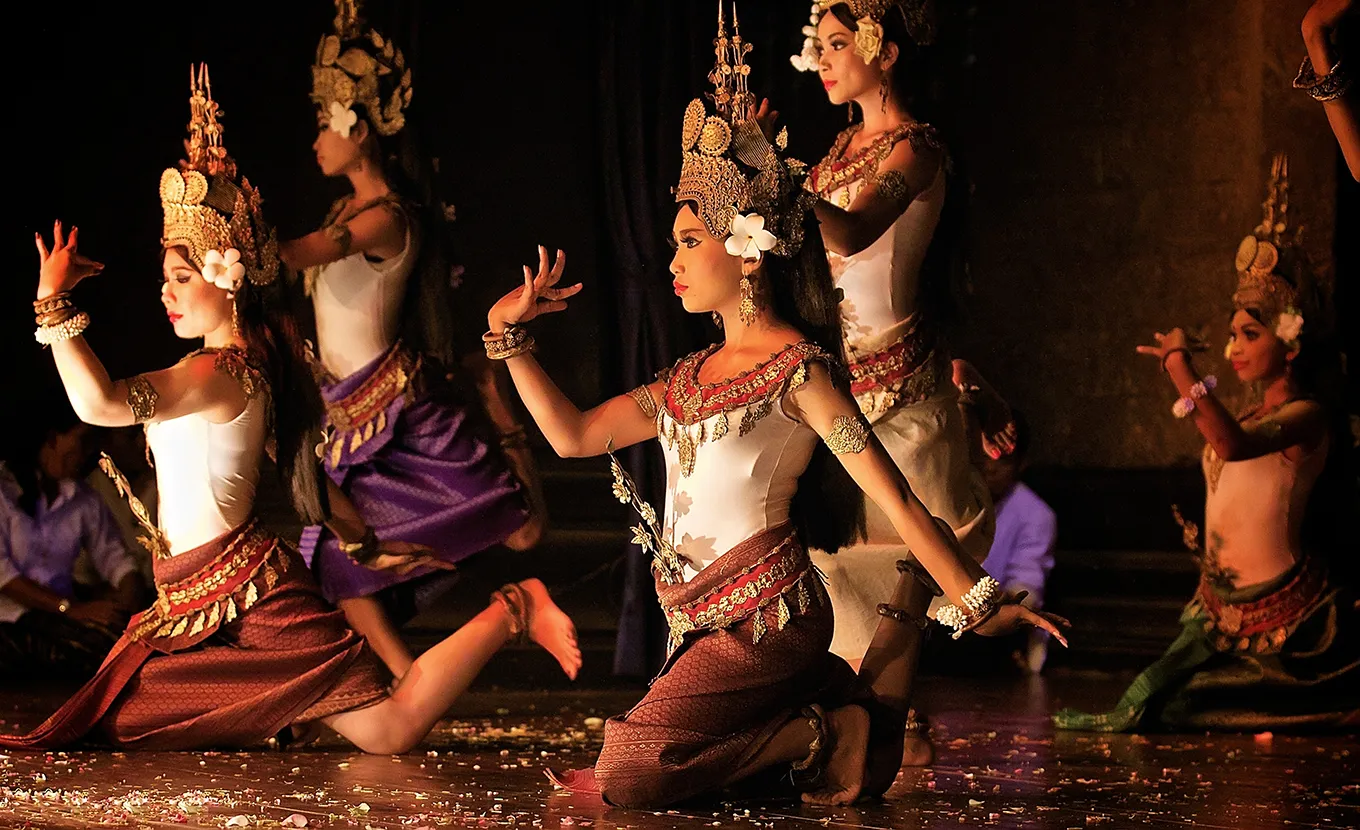
Devatas and Apsaras: Throughout the temple, particularly on the walls of the central towers, you will find a myriad of beautifully sculpted devatas (female deities) and apsaras (celestial dancers). These figures are renowned for their delicate features, graceful postures, elaborate jewelry, and intricate textiles. Many scholars consider them to be the most charming and exquisitely carved female figures in all of Khmer art, contributing significantly to the temple's "Citadel of Women" moniker.
-
Dvarapalas and Guardians: Mythical guardians, often monkey-headed or human-like figures, stand guard at the entrances, adding to the decorative richness.
-
Kalas: Stylized mythical monsters with gaping mouths, often found above doorways, serving as protectors and decorative motifs.
The architectural and sculptural programs of Banteay Srey are a harmonious blend of religious narrative, exquisite artistry, and meticulous execution. Its smaller scale allowed for an unprecedented focus on detail, resulting in a timeless masterpiece that continues to captivate art lovers worldwide.
The Banteay Srey Experience: Intimate Beauty and Artistic Wonder
A visit to Banteay Srey offers a distinct and deeply rewarding experience, standing in delightful contrast to the vast scale of Angkor Wat or the enigmatic faces of Bayon. It’s a journey into intimate beauty, profound artistry, and a unique sense of tranquility.
An Intimate and Serene Atmosphere
-
Escape the Crowds (Relatively): While popular, Banteay Srey's distance from Siem Reap means it often feels less crowded than the main Angkor temples, especially if you visit during off-peak hours (early morning or late afternoon). This allows for a more peaceful and contemplative exploration.
-
Sense of Discovery: The journey through the rural Cambodian landscape to reach the temple adds to the sense of discovery. As you step through its gates, you feel like you've stumbled upon a hidden jewel.
-
Tranquility: The smaller scale and the surrounding natural beauty create a serene atmosphere, perfect for absorbing the intricate details without feeling rushed or overwhelmed.
The Magic of Pink Sandstone and Changing Light
The defining characteristic of Banteay Srey is its exquisite pink sandstone, and its appearance transforms beautifully with the light throughout the day.
-
Morning Glow: In the soft morning light (before 9 AM), the sandstone takes on a delicate golden-pink hue, making the carvings particularly vibrant and almost ethereal. This is often considered the best time for photography.
-
Midday Brilliance: Under the bright midday sun, the pink becomes more pronounced, and the deep relief of the carvings creates dramatic shadows, highlighting their three-dimensional quality.
-
Late Afternoon Hues: As the sun dips lower in the afternoon (after 3 PM), the temple glows with rich, deep rose and amber tones, offering another stunning photographic opportunity and a warm, inviting ambiance.
A Paradise for Art Lovers and Photographers
-
Unparalleled Detail: Banteay Srey is a dream for anyone who appreciates fine art and intricate craftsmanship. Every pediment, lintel, and niche is adorned with astonishing detail, inviting close inspection. You can spend hours just marveling at the precision of the carvings.
-
Photogenic Qualities: Its intimate scale and the rich color of the sandstone make it incredibly photogenic. The ability to capture close-ups of the devatas, the dynamic mythological scenes, and the overall "jewel box" feel provides endless creative opportunities. The symmetrical layout also allows for strong compositional shots.
-
Focus on Carvings: Unlike larger temples where the overall structure dominates, at Banteay Srey, the focus shifts to the narratives and artistic flourishes etched into the stone, making it a unique experience for art enthusiasts.
A Unique Counterpoint to Angkor Wat
Visiting Banteay Srey after seeing Angkor Wat or Angkor Thom provides a wonderful contrast and a more complete understanding of Khmer architectural evolution.
-
Refinement vs. Grandeur: It highlights the Khmer ability to execute both monumental grandeur and exquisite, delicate refinement.
-
Intimate Scale: It offers a delightful change of pace, allowing for a more focused and leisurely exploration.
Learning the Narratives
With the assistance of a good guide, the mythological scenes on the pediments and lintels come alive. Understanding the stories of Ravana, Indra, Krishna, and the various celestial beings adds immense depth to the visual splendor, transforming your visit into a journey through ancient Hindu epics.
The Banteay Srey experience is a truly captivating one, offering a profound appreciation for the artistic zenith of the Khmer Empire and a serene encounter with ancient beauty.
Conservation and Preservation: Protecting a Delicate Masterpiece
Banteay Srey's exquisite beauty and delicate carvings, made possible by its soft pink sandstone, also make it particularly vulnerable to the ravages of time, weather, and human interaction. Its inclusion in the UNESCO World Heritage list, as part of the wider Angkor Archaeological Park, underscores its global significance and the ongoing efforts to ensure its survival.
UNESCO World Heritage Status (1992)
-
Part of Angkor Park: Banteay Srey, despite its distance, is officially part of the Angkor Archaeological Park, which was inscribed on the UNESCO World Heritage List in 1992. This designation recognizes its outstanding universal value as a masterpiece of Khmer art and architecture.
-
Early Preservation Efforts: Unlike many temples, Banteay Srey benefited from early and systematic restoration efforts in the 20th century, which were crucial for its current state of preservation.
Past Challenges and Crucial Early Restoration
Banteay Srey faced significant threats before major conservation efforts began.
-
Jungle Encroachment: Its remote location meant it was heavily overgrown by jungle for centuries, with tree roots threatening to destabilize its delicate structures.
-
Looting and Vandalism: Like many ancient sites, it suffered from looting, most famously the attempted theft of devata figures by André Malraux in 1923. This incident, while unfortunate, ironically highlighted the temple's artistic value and spurred official protection.
-
Henri Marchal's Anastylosis (1930s): The restoration work led by French archaeologist Henri Marchal from 1931 to 1936 was groundbreaking. He meticulously employed the anastylosis method, carefully dismantling sections, reinforcing foundations, and reassembling the original stones. This meticulous, pioneering work was vital in saving Banteay Srey from further decay and established a model for future temple restorations in Angkor.
Ongoing Conservation Challenges Today
Despite successful past efforts, the unique nature of Banteay Srey presents ongoing conservation challenges:
-
Fragile Pink Sandstone:
-
Erosion and Weathering: The soft nature of the pink sandstone makes it particularly susceptible to erosion from wind and rain. The intricate, deep carvings are vulnerable to crumbling over time.
-
Water Infiltration: Water seepage and humidity can cause internal chemical degradation of the stone, leading to flaking and loss of detail.
-
Biological Growth: The humid tropical climate encourages the growth of moss, lichen, and micro-organisms on the stone surfaces. While some are harmless, others can cause damage by retaining moisture or secreting corrosive substances. Regular, careful cleaning is required.
-
Human Impact (Tourism Pressure):
-
Direct Contact: Even accidental touching or leaning on the delicate carvings can cause gradual wear and tear. The natural oils and moisture from hands can also contribute to stone degradation.
-
Humidity from Crowds: Large numbers of visitors in enclosed spaces can raise humidity levels, which is detrimental to the stone.
-
Foot Traffic: While a smaller temple, constant foot traffic on pathways and steps contributes to erosion.
-
Air Pollution: While relatively remote, regional air pollution can contribute to acid rain and other forms of atmospheric deposition that slowly damage the stone.
Current Protection Measures and Future Efforts
The APSARA Authority (Authority for the Protection and Management of Angkor and the Region of Siem Reap), in cooperation with international partners, continues to manage and protect Banteay Srey.
-
Roped-off Areas and Elevated Walkways: To minimize direct human impact, many of the most delicate areas and carvings are now protected by ropes or elevated wooden walkways, ensuring visitors can admire the art without touching it.
-
Monitoring and Maintenance: Regular monitoring of the temple's condition, along with ongoing cleaning, consolidation of fragile sections, and repair of minor damages, are crucial.
-
Water Management: Ensuring proper drainage around the temple helps mitigate the impact of water on the foundations and stone.
-
Visitor Education: Efforts are made to educate visitors about the importance of respectful behavior and not touching the carvings.
The conservation of Banteay Srey is a continuous, delicate balancing act aimed at preserving its unique artistic value while allowing visitors to experience its profound beauty. Its survival is a testament to dedicated conservation efforts and a global commitment to safeguarding this "jewel" of Khmer heritage.
Planning Your Artistic Pilgrimage: Unveiling Banteay Srey’s Charm
Visiting Banteay Srey offers a distinct and rewarding experience, making it a highly recommended addition to any Angkor itinerary. Its more remote location requires a bit more planning, but the intimate beauty of the temple makes it well worth the effort.
Location and Accessibility
-
Distance from Siem Reap: Banteay Srey is located approximately 35-40 kilometers (22-25 miles) northeast of Siem Reap town.
-
Travel Time: The drive typically takes about 45 minutes to 1 hour each way, depending on traffic and road conditions. The roads are generally well-paved.
Getting There: Your Transportation Options
Banteay Srey is too far for a quick tuk-tuk ride unless you're very adventurous and have a whole day dedicated to it. Most visitors combine it with other temples or hire private transport.
-
Private Car/Taxi: This is the most comfortable and recommended option for the journey. It offers air conditioning and flexibility. Your driver can wait for you while you explore.
-
Tuk-tuk: While possible, a tuk-tuk ride of this distance can be long, hot, and dusty. It's usually part of a full-day "Grand Circuit" or an extended Banteay Srey specific tour. Ensure your tuk-tuk has a good engine and negotiate a fair price for the round trip.
-
Motorbike/Scooter: For experienced riders, renting a scooter offers independence, but be aware of traffic and road conditions, and always wear a helmet.
-
Organized Tour: Many tour operators offer combined tours that include Banteay Srey, often with other remote temples like Phnom Kulen or Kbal Spean, or as part of the "Grand Circuit."
Entrance Fee and Angkor Pass
-
Included in Angkor Pass: Banteay Srey is included in the standard Angkor Pass (1-day, 3-day, or 7-day). You do not need a separate ticket for this temple. Ensure you have your pass ready for inspection upon arrival.
Best Time to Visit Banteay Srey
-
Early Morning (before 9:00 AM): This is highly recommended. The soft morning light beautifully illuminates the pink sandstone, creating stunning photo opportunities. It also helps you avoid the main midday heat and larger tour groups, allowing for a more intimate experience.
-
Late Afternoon (after 3:00 PM): Similar to the morning, the late afternoon sun casts a warm, golden glow on the temple, offering another chance for beautiful photography and a quieter atmosphere as day-trippers start to depart.
-
Dry Season (November to February): Offers comfortable temperatures and sunny skies, ideal for clear photography. This is also peak tourist season.
-
Shoulder Seasons (March-May & Sept-Oct): Hotter (March-May) or wetter (Sept-Oct), but potentially fewer crowds. The wet season brings lush greenery, which can enhance the jungle setting.
Duration of Visit
-
At the Temple Site: Allocate 1.5 to 2 hours to explore Banteay Srey thoroughly. This allows ample time to admire the intricate carvings, walk around the enclosures, and soak in the atmosphere.
-
Total Trip from Siem Reap: Depending on your transport and whether you combine it with other sites, expect a total trip duration of 4 to 6 hours (round trip travel included).
Essential Tips for Your Artistic Pilgrimage
-
Modest Dress: As a sacred site, respectful clothing is required. Shoulders and knees must be covered for both men and women. Loose-fitting long pants or skirts, and shirts with sleeves are ideal.
-
Sturdy Footwear: Wear comfortable, closed-toe walking shoes or hiking sandals. You'll be walking on uneven stone surfaces and dirt paths.
-
Sun Protection: The Cambodian sun can be intense. Bring a wide-brimmed hat, good sunglasses, and high-SPF sunscreen.
-
Hydration: Carry plenty of bottled water. There are local vendors outside the temple, but having your own supply is always wise.
-
Insect Repellent: Recommended, especially if visiting during the wet season or exploring nearby rural areas.
-
Photography Gear: Bring extra batteries and memory cards. A good macro lens can be fantastic for capturing the intricate details of the carvings. Respect designated areas and don't touch the carvings.
-
Licensed Tour Guide: Highly recommended. A good guide will bring the mythological narratives of the pediments and lintels to life, pointing out details you might otherwise miss and providing valuable historical and cultural context.
-
Respect the Ropes/Walkways: Due to the delicate nature of the carvings, many areas are roped off or have elevated wooden walkways. Stick to these designated paths to protect the temple.
-
Local Interactions: The journey to Banteay Srey passes through rural villages. Consider supporting local vendors or artisans outside the temple.
A well-planned expedition to Banteay Srey promises an unparalleled artistic and cultural immersion, revealing a different, equally magnificent facet of the ancient Khmer Empire.
How Golden Trail Travel Curates Your Unforgettable Banteay Srey Expedition
For an effortless, enriching, and truly insightful exploration of Banteay Srey, Cambodia's exquisite "Citadel of Women," Golden Trail Travel is your ideal partner. We specialize in crafting bespoke Cambodian adventures that delve into the country's most compelling historical sites and unique natural landscapes, ensuring you experience them with unparalleled comfort, profound knowledge, and unwavering commitment to responsible tourism.
Golden Trail Travel possesses an intimate understanding of Banteay Srey's unique charm, its delicate artistry, and the logistical intricacies of reaching this somewhat remote masterpiece. Our meticulously planned tours handle all aspects, from comfortable, air-conditioned private transportation directly from your accommodation in Siem Reap to providing access to exceptional, licensed expert local guides. Our guides illuminate Banteay Srey's fascinating history, reveal the profound stories etched into its pink sandstone, and help you discover its intricate details safely and respectfully. We prioritize authentic, immersive experiences, ethical tourism practices, and your absolute comfort and safety, transforming a visit into a true journey of artistic discovery.
Why choose Golden Trail Travel for your Banteay Srey expedition?
-
Expertly Designed Itineraries: We craft tailored half-day or full-day tours that seamlessly integrate Banteay Srey, often combining it with other captivating sites like Phnom Kulen, Kbal Spean, or the Cambodian Landmine Museum, to create a richer, more diverse experience. Our schedules are optimized to ensure you visit Banteay Srey during the best light for photography and fewer crowds.
-
Knowledgeable and Passionate Local Guides: Our guides are not just escorts; they are licensed, highly experienced, and deeply passionate about Khmer history, art, and culture. They bring the intricate carvings of Banteay Srey to life with captivating stories of Hindu mythology, insights into the unique craftsmanship, and explanations of its symbolism. Their insights are invaluable for a truly enriching visit.
-
Seamless and Stress-Free Logistics: We handle all transportation arrangements, providing comfortable, reliable, and efficient private vehicles for your journey to Banteay Srey. This eliminates all logistical worries, allowing you to relax and fully immerse yourself in the awe-inspiring artistry of the temple, without worrying about navigation or road conditions.
-
Authentic and Immersive Experience: Our tours are designed to provide a genuine and profound experience of Banteay Srey's delicate beauty and historical significance. We encourage respectful exploration and provide opportunities to connect with the unique, intimate atmosphere of this artistic gem, truly embodying the spirit of discovery.
-
Commitment to Responsible Tourism: At Golden Trail Travel, we are deeply committed to sustainable and ethical tourism practices. Our tours operate with the utmost respect for the ancient monuments, the fragile natural environment, and the local communities surrounding the park. We ensure that your visit contributes positively to the preservation of Cambodia's invaluable heritage and supports local livelihoods.
-
Customer-Centric Approach and Flexibility: Your comfort, safety, and ultimate satisfaction are our absolute top priorities. We offer flexibility to cater to your specific interests, pace, and preferences, whether you're an art enthusiast, a keen photographer, a history buff, or simply looking for a tranquil escape into ancient wonders.
Don't miss the opportunity to explore the unparalleled beauty and intricate artistry of Banteay Srey, Cambodia's exquisite "Citadel of Women." Allow us to guide you to this remarkable place, where every delicate carving tells a story of devotion and craftsmanship, and where ancient beauty continues to captivate the modern eye. Visit our website today at https://goldentrailtravel.com/ to explore our Angkor Park and remote temple tour options that include Banteay Srey and book your unforgettable Cambodian adventure into a truly majestic past!
Customer Reviews: Voices from the Citadel of Women
Hear what our esteemed customers have to say about their unforgettable Banteay Srey experiences with Golden Trail Travel:
"Banteay Srey was an absolute dream come true! The pink sandstone is even more stunning in person, and the carvings are just mind-blowing. Our Golden Trail Travel guide, Mr. Sopheak, brought every mythological scene to life. It felt like walking through a living art gallery. Highly, highly recommend!" — Olivia R., United States
"We wanted to see more than just the main Angkor temples, and Banteay Srey with Golden Trail Travel was the perfect addition. Its smaller scale allowed us to really appreciate the intricate details. The drive through the countryside was lovely too. A truly special place." — Liam K., Australia
"As an art historian, I was deeply impressed by the preservation and delicacy of the carvings at Banteay Srey. The 'Citadel of Women' lives up to its name. Golden Trail Travel provided impeccable service, a comfortable car, and a guide who was an expert on Khmer art history. Couldn't have asked for more." — Professor Elise Dubois, France
"The sunrise at Angkor Wat was incredible, but the serene beauty and artistic perfection of Banteay Srey were a different kind of magic. We visited early morning with Golden Trail Travel, and the light on the pink stone was breathtaking. So peaceful and photogenic!" — Chen Li, Singapore
"This temple is a true jewel! Every carving tells a story, and our Golden Trail Travel guide helped us understand them all. The attention to detail and personalized service made our trip so enjoyable. If you appreciate fine art and a quieter temple experience, Banteay Srey is a must-see." — Sophie & Ben H., Canada
Frequently Asked Questions (FAQ) about Banteay Srey Temple
Here are some common questions about visiting Banteay Srey Temple to help you plan your artistic pilgrimage:
Q1: What is Banteay Srey and why is it unique? A1: Banteay Srey (also spelled Banteay Srei) is a 10th-century Khmer temple in Cambodia, known as the "Citadel of Women" or "Jewel of Khmer Art." It is unique for its use of vibrant pink sandstone, its exquisite and incredibly intricate miniature carvings, and its smaller, more intimate scale compared to larger Angkorian temples.
Q2: Who built Banteay Srey and what was its original purpose? A2: Banteay Srey was built in 967 CE by Yajnavaraha, a Brahmin minister and spiritual advisor, rather than by a king. It served as a private temple dedicated primarily to Shiva (and Vishnu), for the spiritual merit of its patron and his family.
Q3: Is Banteay Srey included in the standard Angkor Pass? A3: Yes, Banteay Srey is included in the standard Angkor Pass (1-day, 3-day, or 7-day). You do not need a separate ticket to visit it.
Q4: How far is Banteay Srey from Siem Reap and how long does it take to get there? A4: Banteay Srey is approximately 35-40 kilometers (22-25 miles) northeast of Siem Reap. The drive typically takes about 45 minutes to 1 hour each way by car or taxi.
Q5: What are the main highlights or must-see features at Banteay Srey? A5: The main highlights are the incredibly detailed and deeply cut bas-reliefs on its pediments and lintels, especially the famous "Ravana Shaking Mount Kailash" and "Indra Riding Airavata." Also, admire the numerous graceful devatas and apsaras, and the overall architectural harmony achieved with the pink sandstone.
Q6: What is the best time of day to visit Banteay Srey for photography? A6: The best times for photography are early morning (before 9:00 AM) or late afternoon (after 3:00 PM). The soft, directional light at these times beautifully illuminates the pink sandstone and enhances the details of the carvings.
Q7: How much time should I allocate for visiting Banteay Srey? A7: You should allocate approximately 1.5 to 2 hours to explore Banteay Srey thoroughly. Including travel time from Siem Reap, the total trip can be 4 to 6 hours, depending on your chosen transport and any additional stops.
Q8: What should I wear when visiting Banteay Srey? A8: As a sacred site, modest clothing is required. Shoulders and knees must be covered for both men and women. Loose-fitting long pants or skirts, and shirts with sleeves are ideal.
Q9: Can I combine Banteay Srey with other attractions? A9: Yes, Banteay Srey is often combined with other sites located in the wider Angkor region, such as Phnom Kulen National Park (for its waterfalls and River of a Thousand Lingas), Kbal Spean, or the Cambodian Landmine Museum, making for a rich full-day tour.
Q10: How can Golden Trail Travel enhance my visit to Banteay Srey? A10: Golden Trail Travel offers expertly designed tours to Banteay Srey with comfortable private transportation, knowledgeable local guides who bring the temple's art and mythology to life, and seamless logistics to ensure you visit at the optimal time. We ensure an insightful, stress-free, and memorable exploration of this exquisite jewel. Visit https://goldentrail.com/ to book your artistic pilgrimage!
Conclusion: Banteay Srey – A Timeless Masterpiece of Delicate Artistry
Banteay Srey, the "Citadel of Women," stands as a captivating testament to a pinnacle of Khmer artistic achievement, proving that monumental grandeur is not the sole measure of greatness. Its intimate scale, the warm embrace of its pink sandstone, and the astonishing precision of its carvings create an experience of singular beauty and profound artistic wonder. It is a place where every pediment tells a vivid story, every devata exudes ethereal grace, and every moment invites contemplation of the hands that wrought such perfection over a thousand years ago. Banteay Srey offers a unique, serene, and deeply rewarding encounter with the soul of ancient Cambodia.
By choosing to embark on this extraordinary artistic journey with Golden Trail Travel, you are not just booking a tour; you are investing in an authentic, insightful, and responsible exploration of one of the world's most exquisitely crafted cultural treasures. We are dedicated to ensuring your visit to Banteay Srey is seamless, comfortable, and deeply enriching, allowing you to connect intimately with its timeless beauty and profound history. Let us guide you to this remarkable temple, where delicate art meets enduring legacy. Your unforgettable Cambodian adventure to the heart of Banteay Srey awaits