15 Ng. 100 Đ. Nguyễn Xiển, Thanh Xuân Nam, Thanh Xuân, Hà Nội 100000



15 Ng. 100 Đ. Nguyễn Xiển, Thanh Xuân Nam, Thanh Xuân, Hà Nội 100000
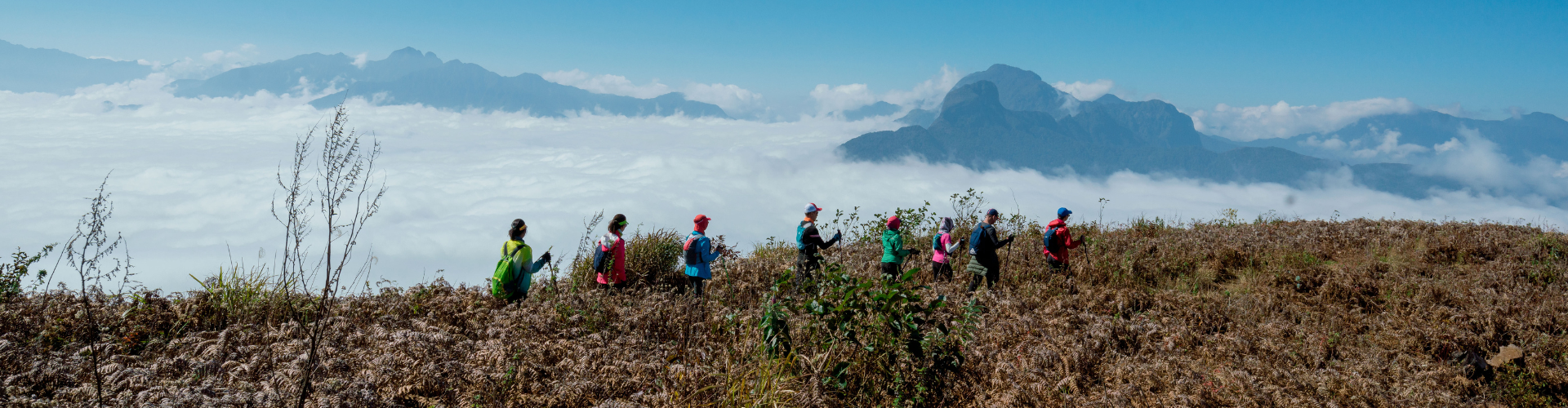
The northernmost province of Vietnam, Ha Giang, is a place where the landscape doesn’t just provide a backdrop—it tells a story. For decades, the "Happiness Road" has winding through the jagged limestone pinnacles of the Dong Van Karst Plateau, offering a rite of passage for adventurers. While the roar of motorbikes has become the standard soundtrack of the region, a new generation of explorers is seeking a quieter, more intimate connection with the earth. For these riders, having a precise Ha Giang Loop cycling route map is not just about navigation; it is about understanding the pulse of the mountains.
At Golden Trail Travel, we believe that the only way to truly "see" Ha Giang is at the pace of a bicycle. Every kilometer on this loop is earned through sweat and determination, making the vistas from the top of the Ma Pi Leng Pass feel infinitely more rewarding. In this exhaustive guide, we break down the geography, the gradients, and the hidden trails that make this region a world-class cycling destination. Whether you are looking for a solo challenge or joining one of our professionally supported cycling tours, this is your roadmap to the ultimate adventure.
.jpg)
Before diving into the turn-by-turn directions, it is essential to understand the "M-shape" of the northern frontier. The Ha Giang Loop is a circuit that typically begins and ends in Ha Giang City, covering four main districts: Quan Ba, Yen Minh, Dong Van, and Meo Vac.
A standard Ha Giang Loop cycling route map covers approximately 350 kilometers. However, for cyclists, the "distance" is a deceptive metric. In the Karst Plateau, a 50-kilometer day can feel like a 150-kilometer flat ride due to the relentless vertical gain. You are transitioning from the lush tropical lowlands of the Lo River valley into a high-altitude "stone forest" where the oxygen is thinner and the views are wider.
To successfully navigate the loop on a bike, we recommend a 6-to-7-day itinerary. This allows for the "slow travel" experience that makes cycling so special.
The journey starts with a relatively flat 20km exit from the city. This is your warm-up. The terrain begins to tilt upwards as you approach the Bac Sum Pass.
Distance: 55 km
Elevation Gain: ~1,300m
The Map Detail: Look for the "Heaven’s Gate" (Cổng Trời) marker. This is the highest point of the day. From here, the route map shows a steep descent into the Tam Son valley, where the iconic Twin Mountains (Co Tien Mountain) sit symmetrically in the center of the plain.
This segment is a contrast of deep valleys and pine-covered ridges. After the dramatic views of Quan Ba, the road follows the Mien River.
Distance: 50 km
Elevation Gain: ~900m
The Map Detail: The route map offers two choices here: the "short" road (high mountain pass) or the "long" road (along the river). For cyclists, the river road offers a much-needed break for the legs, winding through bamboo forests and small ethnic villages before a final climb into the pine forests of Yen Minh.
This is where the landscape turns "lunar." You leave the greenery behind and enter the UNESCO Global Geopark.
Distance: 45 km
Elevation Gain: ~1,400m
The Map Detail: The Tham Ma Pass is the highlight here—a series of 9 perfect switchbacks. Shortly after, the route map leads to the Sa Phin valley, home to the Hmong King’s Palace. The final push into Dong Van town is a rugged, high-altitude traverse through fields of grey limestone.
This is the shortest day in terms of distance but the most significant in terms of visual impact. You are crossing the Ma Pi Leng Pass.
Distance: 25 km
Elevation Gain: ~700m
The Map Detail: The "Sky Path" is a narrow walking/biking trail that runs higher than the main road. On your Ha Giang Loop cycling route map, this is the "peak experience." You will be pedaling along a cliff edge with the Nho Que River nearly 1,000 meters below.
Leaving the main tourist path, this section takes you into the wilder, southern part of the loop.
Distance: 75 km
Elevation Gain: ~1,600m
The Map Detail: Look for the "M-shaped road" (Doc Chu M). It is a technical section with sharp descents and punchy climbs. The destination, Du Gia, is a lush valley famous for its waterfalls and Tay ethnic hospitality.
The final leg is a long, rewarding descent back to where it all began.
Distance: 75 km
Elevation Gain: ~1,100m
The Map Detail: The road passes through the Thai An valley. It is a long day, but the adrenaline of finishing the loop usually carries riders through the final 20km of flat road back into Ha Giang City.
For those who want to tackle this map with professional support, including lead cyclists and support vans, Golden Trail Travel’s guaranteed tours are the perfect solution.
A true Ha Giang bike route map is three-dimensional. When planning, you must study the elevation profile as closely as the turns.
Average Gradient: Most passes average around 7-9%. However, some "short-cuts" or village trails can reach 15-18%.
Road Conditions: About 95% of the main loop is paved. However, "paved" in Ha Giang can mean everything from smooth asphalt to rough, weathered concrete.
The "Happiness Road" Signature: The road was built by hand in the 1960s. This means the turns are often tighter and the gradients more organic than modern engineered highways.
You cannot conquer this map with a standard city bike. The mountains demand respect and high-performance equipment.
Gearing: A 1x12 or 2x11 drivetrain is standard. You will want a "granny gear" (e.g., 34T front with a 42T or 50T rear) to manage the sustained 10km climbs.
Brakes: Hydraulic disc brakes are non-negotiable. The descents are long and can be slippery when misty. You need consistent, one-finger stopping power.
Tires: We recommend 35mm to 45mm tires with a light tread. This provides comfort on the rougher patches of the "Happiness Road" while maintaining efficiency on the asphalt.
At Golden Trail Travel, our cycling tours provide premium mountain bikes and gravel bikes that are specifically tuned for these northern gradients.
A Ha Giang Loop cycling route map is also a cultural map. You are traveling through the homelands of 22 different ethnic groups.
The Hmong (Dong Van/Meo Vac): Recognizable by their vibrant textiles and incredible skill at farming on vertical slopes.
The Dao (Quan Ba): Famous for their traditional herbal baths—the ultimate recovery tool for a cyclist’s sore muscles.
The Tay (Du Gia): Known for their stilt houses and warm hospitality. Sharing a "family dinner" in a Tay homestay is a highlight of the trip.
Timing is everything in the northern highlands.
September to November: The "Golden Season." The weather is cool and dry, and the rice terraces are a vibrant yellow.
March to May: Spring blossoms. Peach and plum trees paint the mountains in white and pink.
Avoid June to August: The rainy season. Landslides are a risk, and the descents can be dangerous for cyclists.
While the idea of a solo "Ha Giang Loop cycling route map" adventure is romantic, the reality is physically and logistically demanding.
Logistics: Finding the right homestays that can accommodate bikes and providing high-calorie "cyclist-friendly" meals can be difficult in remote areas.
Support Van: Having a "broom wagon" following you means you can carry less gear on your bike, making the climbs significantly more enjoyable. It also provides a safe retreat if the weather turns or if you experience a mechanical failure.
Permits: Ha Giang is a border province. You need a specific "Border Entry Permit." When you join our guaranteed tours, we handle all the paperwork for you.
On a bike, aim for 50-70 km per day. While this sounds short, the vertical gain (usually 1,200m+ per day) means you will be in the saddle for 5-7 hours.
Yes, most riders use Komoot or Strava. However, always carry a backup power bank, as cold temperatures in the mountains can drain phone batteries quickly.
Physically, the climb out of Yen Minh toward Dong Van is often cited as the toughest due to its length. Mentally, the Ma Pi Leng Pass requires the most focus due to the sheer drops.
No. There are many motorbike mechanics who can help with basic issues like tires, but for high-end hydraulic brakes or carbon frames, you must be self-sufficient or travel with a professional tour operator like Golden Trail Travel.
Yes! E-mountain bikes are becoming popular for the Ha Giang Loop. They allow riders of different fitness levels to enjoy the map together.
"I've cycled in the Pyrenees and the Alps, but the Ha Giang Loop is something else. The scale of the limestone peaks is mind-blowing. Golden Trail Travel provided a perfect route map and the support van was a lifesaver on the steeper ramps!" — Mark T., Australia
"Cycling through the villages instead of just passing them on a motorbike changed the whole experience. I felt like a guest of the mountains, not just a tourist. The Ma Pi Leng Pass is truly the King of Passes." — Elena R., Italy
"The 6-day itinerary was perfectly balanced. Tough climbs in the morning, amazing local food for lunch, and incredible homestays in the evening. If you love cycling, this is the only way to see Vietnam." — Sarah L., UK
The Ha Giang Loop cycling route map is a gateway to a world that few people ever truly experience. It is a journey that asks for your best and gives you back even more in return. From the mist-covered peaks of Quan Ba to the deep abyss of the Ma Pi Leng, every pedal stroke is a story of discovery.
Are you ready to map your own adventure? Visit Golden Trail Travel today to explore our cycling tours or book your spot on our next guaranteed tours. The Happiness Road is waiting for you.


.jpg "The Epic Cycling Adventure: Rediscovering Your Soul on Two Wheels")
.jpg "The Ultimate Trekking Expedition: A Journey Beyond Boundaries")
.jpg "The Ultimate Guide to Trekking Cao Bang Vietnam: Journey Through the Realm of Mountains and Waterfalls")
.webp "Cuc Phuong National Park Day Trip")
.jpg "Pu Luong Nature Reserve: An Ethereal Journey into Vietnam’s Hidden Eden")