Prambanan Temple: Java's Majestic Hindu Masterpiece – Where Epic Tales Rise in Stone
In the heart of Central Java, amidst verdant plains and distant volcanoes, rises a breathtaking symphony of stone spires dedicated to the Hindu Trimurti: Brahma, Vishnu, and Shiva. This is Prambanan Temple, a colossal complex of ancient temples that stands as Indonesia's largest Hindu site and a UNESCO World Heritage gem. Often overshadowed by its Buddhist counterpart, Borobudur, Prambanan offers a distinctly different, yet equally mesmerizing, journey into the rich tapestry of ancient Javanese civilization and Hindu mythology.
Known locally as Roro Jonggrang, or "The Temple of the Slender Virgin," Prambanan's towering, elegant structures captivate with their intricate carvings, dramatic storytelling, and a sense of awe-inspiring grandeur. Built in the 9th century CE, it represents a golden age of Hindu culture in Java, a testament to the power and devotion of the Mataram Kingdom. From the epic narratives of the Ramayana carved into its temple walls to the legendary tale of its mythical creation, Prambanan is more than just an archaeological site; it's a living epic etched in stone.
This comprehensive guide invites you on an immersive exploration of Prambanan Temple, delving into its fascinating history, its intricate architectural symbolism, and the powerful stories of gods and heroes depicted on its walls. We'll explore the magical Ramayana Ballet performed under its moonlit spires, uncover nearby hidden temples, and provide essential tips to ensure your visit to this majestic Hindu masterpiece is truly unforgettable. Prepare to be swept away by the artistry, devotion, and sheer scale of Prambanan.
History & Mythology: The Rise of a Hindu Empire
Prambanan Temple stands as a powerful symbol of the glorious Hindu Mataram Kingdom, its construction steeped in both historical rivalry and captivating folklore.
The Mataram Kingdom & The Sanjaya Dynasty (9th - 10th Century CE)
-
Construction Period: Prambanan was built around the mid-9th century CE, marking a significant shift in religious and political power in Central Java. This period saw the resurgence of Hinduism after a period dominated by the Buddhist Saliendra Dynasty (responsible for Borobudur).
-
Royal Patronage: The complex is widely believed to have been commissioned by King Rakai Pikatan of the Sanjaya Dynasty, possibly to rival the Buddhist monument of Borobudur and assert the dominance of Hinduism in the region. It served as a grand royal temple, a center for state rituals, and a symbol of the kingdom's power and devotion.
-
Dedicated to the Trimurti: Unlike Borobudur's singular Buddhist focus, Prambanan is explicitly dedicated to the Trimurti, the three principal deities of Hinduism:
-
Shiva (Mahadeva): The Destroyer, but also the transformer and patron of the arts. He is the central and largest deity in Prambanan.
-
Vishnu: The Preserver.
-
Brahma: The Creator. This dedication reflects the theological understanding of Hindu cosmic order.
The Legend of Roro Jonggrang: "The Temple of the Slender Virgin"
Prambanan's local name, Roro Jonggrang, is derived from a popular Javanese folk tale that explains its mythical creation and gives the temple a romantic, yet tragic, backstory.
-
The Story: The legend tells of a powerful demon prince, Bandung Bondowoso, who fell in love with the beautiful Princess Roro Jonggrang. To avoid marrying him, she set an impossible condition: he had to build her a thousand temples in a single night.
-
Demonic Aid: Bandung Bondowoso, with the help of an army of spirits and demons, nearly succeeded. As dawn approached and only one temple remained, Roro Jonggrang tricked him by ordering her maids to light fires and pound rice, mimicking the sounds of morning.
-
The Curse: Enraged by the deception, Bandung Bondowoso cursed Roro Jonggrang, turning her into the final, incomplete stone statue needed to complete the thousand temples. This statue is believed to be the exquisite Durga statue within the main Shiva temple. The unfinished temple count gives the legend its poignancy.
While a myth, the legend of Roro Jonggrang adds a layer of mystique and romance to Prambanan, connecting the monumental stone structures to human emotions and divine wrath.
The Mysterious Abandonment (10th - 11th Century CE)
Like Borobudur, Prambanan was mysteriously abandoned shortly after its completion, around the early 10th century CE. The exact reasons are still debated by historians:
-
Mount Merapi Eruption: A catastrophic eruption of the nearby Mount Merapi volcano may have forced the court to relocate, burying the temples under ash.
-
Shift of Power: The political and religious center of the Mataram Kingdom shifted eastward to East Java, possibly due to a dynastic struggle or a desire for new agricultural lands.
-
Conversion to Islam: Over subsequent centuries, Islam gradually became the dominant religion in Java, and the Hindu temples fell into disuse and disrepair.
Regardless of the precise reason, Prambanan, like Borobudur, was swallowed by jungle and volcanic debris, fading into local folklore until its rediscovery centuries later. Its history is a powerful testament to the transient nature of empires and the enduring legacy of faith etched in stone.
Architectural Grandeur: Soaring Spires & Intricate Carvings
Prambanan Temple is a triumph of ancient Javanese Hindu architecture, characterized by its towering, slender spires and meticulously carved reliefs that bring epic Hindu narratives to life. It reflects the pinnacle of the Candi (temple) building tradition in Indonesia.
The Temple Complex Layout: A Cosmic Diagram
The entire Prambanan complex is laid out in a symmetrical, concentric square design, representing the Hindu concept of the cosmos. It consists of three main zones:
-
Nista Mandala (Outer Zone): The outermost rectangular area, once enclosed by a wall. It was likely a large open space for rituals and community gatherings, now mostly green lawns.
-
Madya Mandala (Middle Zone): The second, slightly raised rectangular area, also once walled. It originally contained hundreds of Perwara temples (smaller subsidiary temples). This zone symbolizes the realm of humans.
-
Utama Mandala (Inner Zone): The most sacred and highest rectangular platform, enclosed by a final wall. This is the heart of the complex, housing the main towering temples dedicated to the Trimurti and their mounts. This zone symbolizes the realm of the gods.
The Utama Mandala: The Heart of Devotion
This elevated inner courtyard is the focal point of Prambanan, dominating the skyline with its soaring structures.
-
Three Main Temples (Trimurti):
-
Candi Shiva Mahadeva (The Grand Temple of Shiva): Standing at an impressive 47 meters (154 feet) tall, this is the largest and central temple, dedicated to Lord Shiva. It is the most elaborately decorated. Inside, there are four chambers:
-
The main chamber houses a 3-meter tall statue of Shiva Mahadeva (Great God Shiva).
-
Three smaller chambers house statues of his consort Durga Mahisasuramardini (the "Slender Virgin" of the legend), his guru Agastya, and his son Ganesha (the elephant-headed god).
-
Candi Brahma (The Temple of Brahma): Located to the south of Shiva Temple, dedicated to Brahma, the Creator.
-
Candi Vishnu (The Temple of Vishnu): Located to the north of Shiva Temple, dedicated to Vishnu, the Preserver.
-
Three Vahana Temples: Directly in front of the main Trimurti temples, facing east, are three smaller temples dedicated to their respective Vahanas (mounts):
-
Candi Nandi: Facing Shiva Temple, dedicated to Nandi, Shiva's sacred bull.
-
Candi Garuda: Facing Vishnu Temple, dedicated to Garuda, Vishnu's mythical eagle.
-
Candi Hamsa: Facing Brahma Temple, dedicated to Hamsa, Brahma's sacred swan (though sometimes identified as Angsa).
-
Two Apit Temples: Two "flanking" temples are located between the rows of main and Vahana temples, but their original function and dedication remain somewhat unclear.
-
Four Kelir Temples: Four small shrine-like structures at each of the four cardinal points of the inner courtyard.
-
Four Patok Temples: Four small temples at the corners of the inner courtyard.
The Madya Mandala: The Realm of Perwara Temples
This middle courtyard once contained an astounding 224 Perwara temples (subsidiary temples), arranged in four concentric rows. Most of these were heavily damaged by earthquakes and neglect over centuries, and many remain in ruins, consisting primarily of their stone bases. Their presence signifies the countless devotees and lesser deities surrounding the central divine power.
Intricate Carvings & Symbolism
The true artistic brilliance of Prambanan lies in its highly detailed and exquisite stone carvings (reliefs) that adorn the outer walls of the main temples.
-
Ramayana Reliefs: The inner walls of the balustrades of the Shiva and Brahma temples are covered with a continuous narrative of the Ramayana epic. Read clockwise, starting from the east gate of the Shiva Temple, these reliefs depict the story of Prince Rama's quest to rescue his wife Sita from the demon king Ravana, with the help of the monkey general Hanuman. These carvings are famous for their dynamism, elegance, and vivid storytelling.
-
Krishna-yana Reliefs: The Vishnu Temple features reliefs illustrating the Krishna-yana, the story of Lord Krishna, an avatar of Vishnu.
-
Kalpataru (Tree of Life): Throughout the complex, look for the recurring motif of the Kalpataru, the "tree of life" or "wish-fulfilling tree," often flanked by pairs of celestial beings. This symbolizes prosperity and eternal life.
-
Celestial Beings (Devatas & Apsaras): Beautifully carved figures of divine beings, musicians, and dancers adorn the temple walls, creating a sense of heavenly harmony.
-
Lions: Fierce lion statues guard the staircases, symbolizing protection.
-
Makaras: Mythical sea creatures (often depicted as crocodile-like with an elephant's trunk) serve as decorative waterspouts and guardians at the temple entrances.
The architecture of Prambanan is a powerful expression of Hindu cosmology and epic mythology, inviting visitors to not only marvel at its beauty but also immerse themselves in the stories of the gods.
The Ramayana Ballet: A Living Epic Under the Stars
One of the most captivating and highly recommended experiences at Prambanan Temple is to witness the Ramayana Ballet performed in its open-air theatre. This traditional Javanese dance drama brings the epic tale carved on the temple walls to life, under the moonlit silhouette of the very temples that tell its story.
What is the Ramayana Ballet?
-
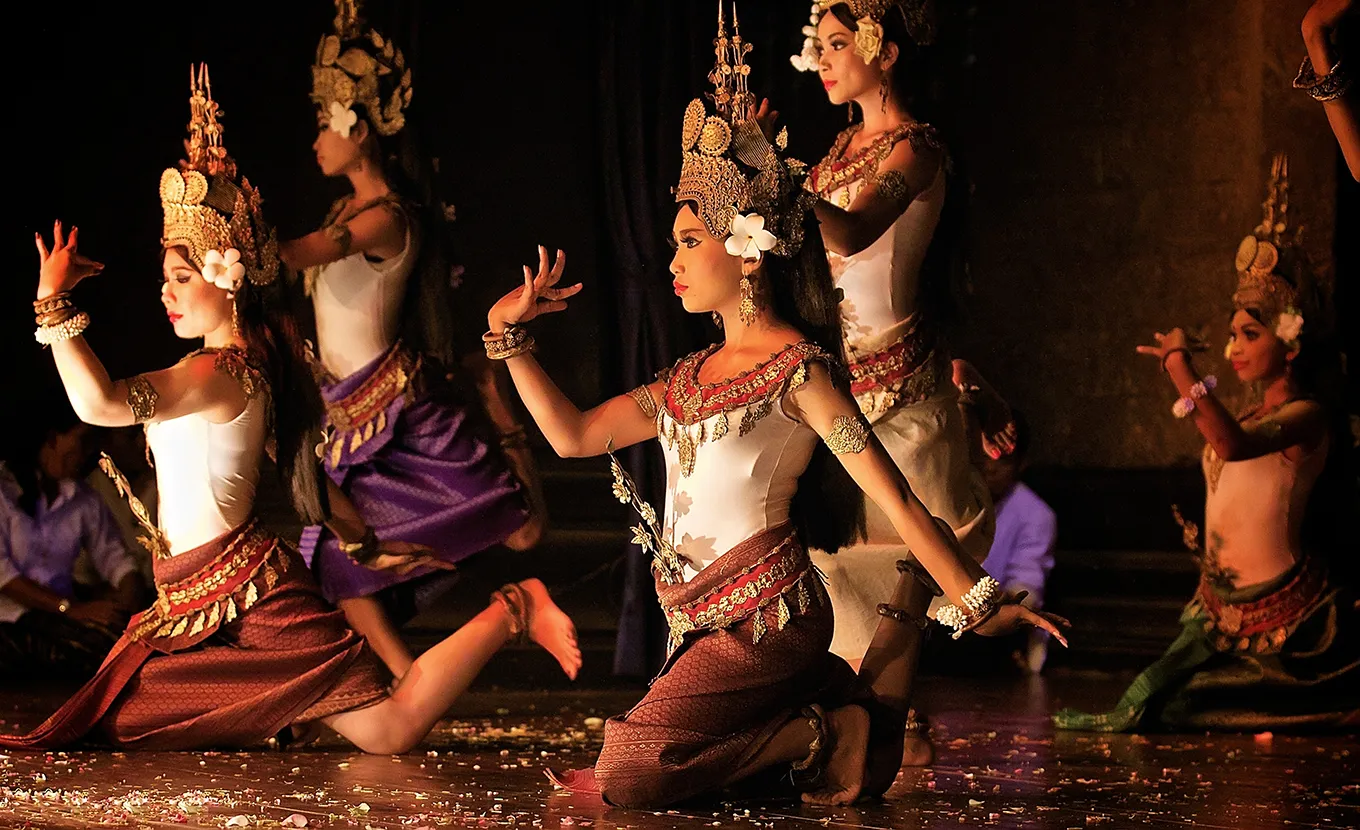
Traditional Javanese Dance Drama: The Ramayana Ballet is not a classical ballet in the Western sense, but a magnificent Javanese art form that combines dance, drama, and traditional music (Gamelan orchestra).
-
Storytelling through Movement: The entire story of the Ramayana epic is conveyed through expressive dance movements, intricate costumes, and the hypnotic sounds of the Gamelan, without spoken dialogue.
-
Episodes: The full Ramayana story is often divided into four main episodes, performed over several nights, but a condensed version is usually presented in a single evening.
-
The Epic Tale: It follows the adventures of Prince Rama, his wife Sita, and his loyal follower, the monkey general Hanuman, as they battle the evil demon king Ravana. Themes of love, loyalty, heroism, and the triumph of good over evil are central.
The Prambanan Performance: An Unforgettable Setting
The unique setting of the Prambanan open-air theatre elevates the Ramayana Ballet to an extraordinary cultural spectacle.
-
Open-Air Theatre: Located just west of the main Prambanan complex, the large open-air stage has the magnificent, illuminated Prambanan temples as its natural backdrop. As the performance unfolds, the temples are bathed in atmospheric lighting, creating a magical ambiance.
-
Gamelan Orchestra: A live Gamelan orchestra, with its distinctive bronze percussion instruments, provides the traditional musical accompaniment, creating an ethereal and rhythmic soundscape.
-
Elaborate Costumes & Makeup: Dancers are adorned in vibrant, intricately detailed traditional Javanese costumes and elaborate makeup, bringing the mythical characters to life.
-
Fire & Special Effects: The performance often incorporates dramatic fire effects, particularly during the battle scenes involving Hanuman, adding to the spectacle.
Performance Schedule & Booking
-
Dry Season (May to October): During the dry season, the full Ramayana Ballet is typically performed on an open-air stage several times a week, usually on specific nights (e.g., Tuesday, Thursday, Saturday) that coincide with the full moon (though non-full moon performances are also common).
-
Wet Season (November to April): During the wet season, performances usually move to an indoor theatre within the complex, which lacks the iconic temple backdrop but ensures the show goes on rain or shine.
-
Tickets: Tickets for the Ramayana Ballet are separate from the temple entrance fee. They can be purchased at the venue or, more conveniently, booked in advance online or through your tour operator like Golden Trail Travel. Various seating categories are available.
-
Arrive Early: It's advisable to arrive at least 30-45 minutes before the show starts to find your seats and enjoy the pre-show atmosphere.
Watching the Ramayana Ballet at Prambanan is a deeply immersive cultural experience, a dynamic counterpart to the static beauty of the temple reliefs. It allows visitors to connect with the living traditions that continue to shape Javanese identity, under the majestic gaze of ancient gods.
Rediscovery & Restoration: A Phoenix from the Ashes
Like its Buddhist contemporary, Borobudur, Prambanan Temple endured centuries of neglect and decay, only to be resurrected through dedicated archaeological efforts. Its restoration is a triumph of conservation.
The Long Sleep: Neglect & Natural Disaster
-
Abandonment (10th-11th Century): After the shift of the Mataram Kingdom's power to East Java, Prambanan, like other temples in the region, was abandoned.
-
Volcanic Ash & Jungle: Over centuries, it was buried under volcanic ash from Mount Merapi and overgrown by dense tropical jungle, becoming a hidden ruin.
-
Earthquakes: Central Java is highly seismic. Numerous earthquakes over the centuries caused significant damage, toppling many of the slender towers.
-
Looting & Vandalism: Local villagers often repurposed stones for their own buildings or burned lime from the stone, contributing to its decay.
Early Discoveries & Attempts at Documentation (17th - 19th Centuries)
-
Early European Sightings: The ruins were known to Europeans as early as the 17th century, but systematic exploration began much later.
-
Colin Mackenzie (1811): A surveyor for Sir Thomas Stamford Raffles (who later "discovered" Borobudur), made initial surveys and drawings of Prambanan, though it remained largely covered.
-
Systematic Clearing: Over the 19th century, various Dutch officials and archaeologists undertook further clearing of the site, revealing more of its grandeur. Looting and removal of statues also occurred during this period.
Major Restoration Efforts (20th Century)
The real effort to bring Prambanan back to life began in the early 20th century.
-
Dutch Colonial Government (1918 onwards): The first serious restoration efforts began in 1918, focusing on documenting, cataloging, and anastylosis (reconstructing a monument using its original parts, as far as possible). Progress was slow due to the sheer scale of the ruins and the lack of funding.
-
Post-Independence Indonesia: After Indonesia gained independence, the government continued the restoration work with renewed vigor.
-
Shiva Temple Restoration (Completed 1953): The first major success was the full restoration of the main Shiva Temple in 1953, a monumental undertaking that required meticulous piecing together of thousands of stone blocks.
-
UNESCO World Heritage (1991): In recognition of its outstanding universal value and the significant restoration work, Prambanan Temple Complex was designated a UNESCO World Heritage Site in 1991.
The 2006 Earthquake & Resilience
-
Major Damage: In May 2006, a powerful 6.3 magnitude earthquake struck Central Java, causing significant damage to Prambanan. Many smaller temples collapsed, and the main temples suffered structural cracks and shifting stones.
-
Rapid Response: International and local efforts swiftly mobilized to assess the damage and begin repair work.
-
Ongoing Restoration: While the main temples were largely stable, the restoration of the hundreds of Perwara temples is an ongoing, multi-decade project, with many still lying in ruins, waiting to be pieced back together. This serves as a powerful reminder of the monument's fragility and the continuous effort required for its preservation.
The story of Prambanan's rediscovery and restoration is a testament to human perseverance and the global commitment to preserving cultural heritage for future generations.
Beyond the Main Complex: Lesser-Known Temples & Hidden Gems
While the majestic Prambanan complex is the star attraction, the surrounding area is dotted with several other ancient temples, predominantly Buddhist, offering fascinating insights into the religious diversity and architectural brilliance of ancient Java. These temples are typically included in tours of the Prambanan area.
1. Candi Sewu: The "Thousand Temples" Buddhist Complex
Located just 800 meters north of Prambanan, Candi Sewu is actually older than Prambanan and is the second largest Buddhist temple complex in Indonesia (after Borobudur).
-
Name Origin: "Sewu" means "a thousand" in Javanese, referring to the legend of Roro Jonggrang's 1,000 temples. While not literally a thousand, it did originally comprise a central temple surrounded by 249 smaller Perwara temples.
-
Architectural Style: Dedicated to Manjushri (a Bodhisattva of wisdom), it features a large central temple flanked by four smaller temples, all surrounded by concentric rows of Perwara temples. Its style is distinctly Buddhist, similar to Borobudur but on a smaller scale.
-
Serene Atmosphere: Often less crowded than Prambanan, Candi Sewu offers a more tranquil atmosphere for exploration.
2. Candi Bubrah & Candi Lumbung: Adjacent Buddhist Ruins
Situated between Prambanan and Sewu, these two smaller Buddhist temples are also part of the broader Prambanan archaeological park.
-
Candi Bubrah: Meaning "ruined temple," it is indeed a ruin, but still displays some impressive architectural features and Buddha statues.
-
Candi Lumbung: Meaning "granary temple," also a Buddhist temple, featuring a central structure surrounded by smaller stupas.
These offer a glimpse into the extent of Buddhist temple building in the area before the rise of Prambanan.
3. Candi Plaosan: A Unique Blend of Hindu & Buddhist Art
Located about 1.5 kilometers (1 mile) northeast of Prambanan, Candi Plaosan is a particularly interesting temple complex.
-
"Twin Temples": It consists of two main temple complexes, Plaosan Lor (North) and Plaosan Kidul (South). Plaosan Lor, the larger one, features two beautifully restored twin main temples.
-
Religious Syncretism: What makes Plaosan unique is its apparent blend of Hindu and Buddhist elements. Inscriptions suggest it was built by a Buddhist queen (Pramodhawardhani, daughter of King Samaratungga of Saliendra Dynasty) and her Hindu husband (Rakai Pikatan of Sanjaya Dynasty). This reflects the religious harmony that often existed in ancient Java.
-
Intricate Carvings: The temples are adorned with exquisite carvings of Buddha, Bodhisattvas, and celestial figures, but also Hindu-inspired decorative motifs.
-
Serene & Picturesque: Surrounded by rice fields, Plaosan offers a picturesque and peaceful setting for exploration.
4. Candi Kalasan: One of Java's Oldest
Located further west, on the main road between Yogyakarta and Prambanan, Candi Kalasan is one of the oldest surviving Buddhist temples in Central Java, possibly dating back to 778 CE.
-
Architectural Significance: Known for its ornate carvings and a unique octagonal base, it represents an important early phase of Buddhist architecture in Java.
-
Tarabudhisattva Temple: Dedicated to the goddess Tara.
Exploring these lesser-known temples provides a deeper understanding of the religious and artistic landscape of ancient Central Java, complementing the grandeur of Prambanan and Borobudur. Golden Trail Travel can easily integrate these fascinating sites into your customized Central Java itinerary.
Yogyakarta: The Cultural Gateway to Prambanan
Yogyakarta (often simply called Jogja) is more than just a city; it's the beating cultural heart of Java, serving as the essential and vibrant base for exploring Prambanan Temple and its many historical and artistic treasures.
A City Steeped in Tradition
-
Special Region Status: Yogyakarta holds a unique position as a Special Region of Indonesia, still governed by a sultan who acts as the provincial governor. This preserves its royal heritage and traditional customs.
-
Artistic Hub: It's renowned as a center for classical Javanese art and culture, including batik, silverwork, traditional puppet (wayang kulit) performances, and gamelan music.
Key Cultural Attractions in Yogyakarta
-
Keraton (Sultan's Palace):
-
The active royal residence of the Sultan of Yogyakarta, a sprawling complex that offers a fascinating glimpse into Javanese royal life, traditions, and ceremonies.
-
Visitors can explore sections of the palace, including courtyards, pavilions, and a museum showcasing royal artifacts.
-
Traditional performances (Gamelan, dance) are often held here.
-
Taman Sari (Water Castle):
-
Located just southwest of the Keraton, this partially ruined complex was once a magnificent pleasure garden, bathing complex, and meditation area for the Sultan and his family.
-
Explore its beautiful pools, underground tunnels, and unique architecture. It's an excellent spot for photographers.
-
Malioboro Street:
-
The bustling main shopping street of Yogyakarta, a sensory overload of sounds, sights, and smells.
-
Famous for street vendors selling batik clothing, souvenirs, handicrafts, and delicious street food.
-
Perfect for experiencing the vibrant local life and honing your bargaining skills.
-
Batik Workshops & Galleries:
-
Yogyakarta is synonymous with batik, the traditional art of wax-resist dyeing.
-
Visit various workshops (many in the Kota Gede area) to see the intricate process, from drawing patterns to applying wax and dyeing, and purchase high-quality batik products.
-
Kota Gede (Silver Crafting Village):
-
A historic neighborhood famous for its traditional silver craftsmanship.
-
Visit workshops and showrooms where you can see intricate silver jewelry and ornaments being made, and buy unique pieces.
-
Wayang Kulit (Shadow Puppet) Performances:
Getting Around Yogyakarta & to Prambanan
-
TransJogja Buses: An affordable public bus system for navigating the city.
-
Becak (Pedicab): A traditional pedal-powered rickshaw, perfect for short distances and a local experience.
-
Andong (Horse-drawn Cart): Another traditional transport option, especially around the Keraton.
-
Ride-hailing Apps: Gojek and Grab are widely available for motorbikes and cars, offering convenient and affordable transport.
-
Private Car with Driver: For visiting Prambanan, Borobudur, and other distant sites, hiring a private car with a driver (like those provided by Golden Trail Travel) is the most convenient and recommended option, offering flexibility and comfort.
Yogyakarta provides the perfect blend of cultural immersion and practical convenience, serving as an ideal launching pad for your exploration of Prambanan and the historical riches of Central Java.
Planning Your Prambanan Adventure: A Practical Guide
To fully appreciate the grandeur of Prambanan and ensure a smooth visit, some practical planning is essential.
1. Best Time to Visit Prambanan
-
Dry Season (May to October): This is generally the best time to visit for clear skies, minimal rain, and optimal conditions for photography and outdoor activities like the Ramayana Ballet.
-
Time of Day:
-
Morning (7:00 AM - 10:00 AM): Ideal for avoiding the midday heat and the largest crowds. The light is soft for photography. You can explore the complex at a leisurely pace.
-
Late Afternoon (3:00 PM - 5:00 PM): The "golden hour" light is beautiful for photography, and temperatures begin to cool. This time is perfect if you plan to stay for the Ramayana Ballet in the evening.
-
Avoid: Weekends and Indonesian public holidays, as domestic tourist numbers significantly increase.
2. Entrance Fees & Tickets
-
Prambanan Temple Entrance Ticket: There is an entrance fee for foreign visitors, usually paid at the main visitor center. Prices vary for adults and children.
-
Combined Tickets: You can often purchase a combined ticket for Prambanan and Borobudur, which can offer a slight discount if you plan to visit both (highly recommended).
-
Ramayana Ballet Tickets: Tickets for the Ramayana Ballet are separate from the temple entrance fee and can be purchased at the venue or, more conveniently, booked in advance online or through your tour operator like Golden Trail Travel.
3. Dress Code
-
Sarong: As a sacred site, all visitors are required to wear a sarong to cover their legs (from waist to knees) while within the temple complex. Sarongs are usually provided free of charge at the entrance (or included in your ticket), or you can bring your own.
-
Modest Attire: It's also respectful to have shoulders covered.
4. Footwear
-
Wear comfortable walking shoes or sandals as you will be walking extensively on uneven stone pathways and potentially climbing stairs.
-
Slippery Surfaces: Be cautious, especially after rain, as the stone can become slippery.
5. Guides
-
Licensed Local Guides: Consider hiring a licensed local guide at the entrance. They can provide invaluable insights into the history, architectural details, and especially the stories depicted in the Ramayana reliefs, significantly enhancing your understanding and appreciation of the complex.
6. Accessibility
7. Food and Beverages
-
Within the Park: There are kiosks and small eateries near the visitor center.
-
Outside the Park: More dining options are available in the immediate vicinity and, of course, in Yogyakarta.
8. Photography
-
Permission: Generally, photography is permitted throughout the complex.
-
Respectful Photography: Be mindful of other visitors and any ongoing ceremonies. Avoid disruptive behavior.
-
Drone Usage: Drone use might be restricted within the immediate temple area due to its heritage status. Check current regulations.
9. Transportation to Prambanan
-
From Yogyakarta:
-
Private Car with Driver: The most convenient and recommended option, especially for combining Prambanan with other sites or visiting for the evening Ramayana Ballet. Drivers (like those provided by Golden Trail Travel) offer flexibility and comfort.
-
TransJogja Bus: Public bus lines (e.g., Line 1A) can take you directly to Prambanan, a more budget-friendly but less convenient option.
-
Ride-hailing Apps: Gojek and Grab are available, but return trips might be less reliable in the evening.
By planning your visit thoughtfully, you can ensure your time at Prambanan Temple is both enriching and comfortable, allowing you to fully immerse yourself in its ancient grandeur.
Conservation Efforts & Responsible Tourism at Prambanan
Prambanan Temple, as a cherished UNESCO World Heritage Site and a profound cultural monument, is the focus of continuous conservation efforts. As visitors, our actions significantly contribute to its long-term preservation.
Challenges Faced by the Temple
-
Natural Decay & Weathering: The volcanic stone is susceptible to erosion from tropical rain, humidity, and wind. The intricate carvings are particularly fragile.
-
Biological Growth: Moss, lichen, and other microorganisms can grow on the stone surfaces, causing discoloration and degradation.
-
Seismic Activity: Central Java is a highly active seismic zone. Earthquakes are a constant threat to Prambanan's tall, slender structures. The 2006 earthquake caused significant damage, highlighting its vulnerability.
-
Volcanic Ash: Eruptions from nearby Mount Merapi can deposit abrasive and acidic ash, further damaging the stone.
-
Tourism Impact:
-
Physical Wear and Tear: The sheer volume of visitors, especially on steps and pathways, leads to erosion and wear on the ancient stone.
-
Human Touch: Oils and sweat from human hands can damage the delicate reliefs over time.
-
Crowd Congestion: While not directly damaging the stone, overcrowding can detract from the spiritual and contemplative experience.
-
Maintenance & Funding: Ongoing conservation, repair, and monitoring are highly expensive and require consistent funding and expert archaeological teams.
Conservation & Preservation Initiatives
-
UNESCO World Heritage Status (1991): This designation ensures international recognition, monitoring, and support for conservation efforts.
-
Anastylosis Method: The primary restoration method, involving meticulous reassembly of original stone blocks. This is a slow, painstaking process.
-
Seismic Reinforcement: Efforts are made to strengthen the temple structures to better withstand future earthquakes.
-
Drainage Systems: Maintaining and improving the drainage systems is crucial to prevent water damage to the foundations and stone.
-
Regular Cleaning: Routine cleaning of the stone surfaces to remove biological growth and pollutants.
-
Research & Monitoring: Ongoing archaeological and scientific research helps in understanding the monument's structure, materials, and decay processes.
-
Visitor Management Strategies:
-
Designated Pathways: Visitors are guided along specific routes to distribute wear and tear.
-
Restricted Access: Certain areas might have limited access to protect fragile elements.
-
Educational Signage: Informing visitors about the temple's significance and rules for respectful behavior.
-
Discussions on Quotas: Like Borobudur, there are ongoing discussions about potentially implementing daily visitor quotas to further reduce impact.
How Visitors Can Practice Responsible Tourism
Every visitor plays a vital role in protecting Prambanan for future generations.
-
Stay on Designated Paths: Always use the marked stairs and walkways. Do not climb on or walk over prohibited areas or on temple ruins that are not part of the main accessible structures.
-
Do Not Touch Reliefs or Statues: Human touch contributes to the degradation of the ancient stone and its intricate carvings. Observe from a respectful distance.
-
No Sitting on Stupas or Temple Walls: This is both disrespectful and can cause physical damage.
-
Dispose of Waste Properly: Do not litter anywhere within the park grounds. Use designated bins or take your trash with you.
-
Dress Modestly: Adhere to the sarong requirement and dress respectfully as it is a sacred site.
-
Respect Sacredness: Remember Prambanan is a place of worship. Maintain quiet, do not disturb any ongoing ceremonies, and avoid overly loud conversations.
-
Support Local, Ethical Businesses: Choose tour operators and guides who are committed to sustainable practices and contribute positively to the local community and conservation efforts (like Golden Trail Travel).
-
Be Patient with Crowds: Especially during peak times, practice patience and respect for other visitors.
By being a conscious and respectful traveler, you directly contribute to the ongoing preservation of Prambanan Temple, ensuring that this magnificent testament to Hindu devotion and Javanese artistry can inspire future generations.
Planning Your Prambanan Adventure with Golden Trail Travel
While the grandeur of Prambanan Temple is undeniably captivating, navigating its historical depths, understanding its intricate symbolism, and seamlessly integrating it into your Central Java itinerary can be greatly enhanced with expert assistance. This is where Golden Trail Travel becomes your invaluable partner for an enriching and hassle-free journey.
Golden Trail Travel specializes in crafting immersive, seamless, and authentic travel experiences throughout Indonesia, with a particular expertise in Java's rich cultural and historical landscapes. They understand Prambanan's immense significance and are dedicated to ensuring your visit is both insightful and perfectly executed.
Golden Trail Travel offers comprehensive services that elevate your Prambanan experience, including:
-
Customized Temple Tours: Whether you wish to explore Prambanan at a leisurely pace, delve deep into the Ramayana reliefs, or combine your visit with other Central Java wonders like Borobudur Temple, Mount Merapi, or the vibrant cultural heart of Yogyakarta, Golden Trail Travel can design the perfect itinerary tailored to your interests, pace, and budget.
-
Seamless Transfers: They provide comfortable, air-conditioned private transportation from your accommodation in Yogyakarta (or elsewhere) directly to Prambanan and then to your next destination. Their experienced drivers ensure punctual arrivals, allowing you to maximize your time.
-
Expert Local Guides: Enhance your visit with a knowledgeable, English-speaking local guide who can bring the history, architectural symbolism, and the epic tales carved into Prambanan's walls to life. Their insights will deepen your appreciation and understanding of this complex monument.
-
Guaranteed Ramayana Ballet Tickets: If you dream of witnessing the spectacular Ramayana Ballet under the stars with the illuminated temples as a backdrop, Golden Trail Travel can pre-arrange and secure your tickets, ensuring you have a prime viewing experience without the hassle of queuing.
-
Optimal Timing Advice: Benefit from their expertise on the best time to visit Prambanan to optimize your experience, allowing you to avoid the worst of the heat and crowds while capturing the perfect light for photography.
-
Integrated Itineraries: Golden Trail Travel excels at creating multi-day tours that seamlessly link Prambanan with Borobudur, the Sultan's Palace, Taman Sari, Malioboro Street, and even a thrilling Mount Merapi jeep tour, providing a holistic Central Java cultural immersion.
-
Responsible Tourism Commitment: Golden Trail Travel is committed to ethical and sustainable tourism, ensuring that your visit respects the sacredness of the site, minimizes environmental impact, and contributes positively to local communities.
-
Hassle-Free Booking: Their user-friendly website provides clear tour descriptions, transparent pricing, and a secure online booking system, making the planning process straightforward and convenient from anywhere in the world.
Don't just admire the pictures of Prambanan. Let Golden Trail Travel unlock its ancient stories and majestic grandeur, providing the seamless and enriching experience you need to explore this powerful symbol of Hindu artistry in Central Java.
Visit their website today to explore their diverse range of Java tours, including personalized options for Prambanan, and easily book your journey to this iconic landmark: https://goldentrailtravel.com/
Best Time to Visit Prambanan Temple
The best time to visit Prambanan Temple is during the dry season, from May to October, for clear skies, minimal rain, and optimal conditions for photography and outdoor performances.
Within this period, the ideal time of day is:
-
Morning (7:00 AM - 10:00 AM): For cooler temperatures, fewer crowds, and soft morning light ideal for photography.
-
Late Afternoon (3:00 PM - 5:00 PM): For the beautiful "golden hour" light and to stay for the evening Ramayana Ballet performance.
Essential Tips for Visiting Prambanan Temple
-
Combined Tickets: Consider purchasing a combined ticket for Prambanan and Borobudur if you plan to visit both, as it can offer a discount.
-
Ramayana Ballet Tickets: Book these separately and in advance, especially during the dry season, through your tour operator (Golden Trail Travel can help).
-
Dress Code: A sarong and sash are mandatory (provided at the entrance). Shoulders covered is also recommended.
-
Comfortable Footwear: You'll be doing a lot of walking on uneven stone pathways.
-
Sun Protection: The sun can be intense. Wear sunscreen, a hat, and sunglasses.
-
Stay Hydrated: Carry a water bottle.
-
Hire a Guide: Highly recommended to understand the intricate Ramayana reliefs and the temple's history.
-
Respect the Monument: Do not touch the carvings, climb on structures, or litter. Stay on designated paths.
-
Cash: Have Indonesian Rupiah (IDR) for the entrance fee, guide services, and any small purchases.
Customer Reviews for Prambanan Temple & Golden Trail Travel
"Prambanan Temple is absolutely stunning! The architecture is so different from Borobudur, and the Ramayana reliefs are incredibly detailed. We booked our full-day tour including Prambanan and Borobudur with Golden Trail Travel, and they were outstanding. Our guide was a true expert, bringing the ancient stories to life. Flawless logistics and a wonderful experience!" — Sarah H., Canada
"Watching the Ramayana Ballet with the illuminated Prambanan temples as the backdrop was one of the most magical experiences of my life. Golden Trail Travel arranged everything perfectly, from tickets to transport. Their professionalism and attention to detail made it a stress-free and truly unforgettable evening." — Michael D., UK
"Prambanan's grandeur is breathtaking, especially the Shiva temple. We also explored Candi Sewu nearby, which was much quieter and equally beautiful. Golden Trail Travel designed a fantastic itinerary that included all these hidden gems around Prambanan. Their drivers were excellent, and the whole tour was comfortable and enriching." — Emily L., Australia
"I was captivated by the sheer artistry of the Prambanan carvings. It's incredible to think how they built something so magnificent so long ago. Golden Trail Travel provided a fantastic private tour. Our guide had a deep passion for the history and shared so many fascinating insights. They truly made the visit special and easy to book through their website." — David G., USA
"Our trip to Yogyakarta and Prambanan was seamlessly handled by Golden Trail Travel. They recommended visiting in the late afternoon for the best light, and it was perfect for photos. We stayed for the ballet, and it was just spectacular. Their service was top-notch, and we felt well taken care of throughout our journey." — Anna K., Germany
Frequently Asked Questions (FAQ) about Prambanan Temple
Q1: What is Prambanan Temple? A1: Prambanan Temple is the largest Hindu temple complex in Indonesia and a UNESCO World Heritage Site. Built in the 9th century, it is dedicated to the Trimurti (Brahma, Vishnu, and Shiva) and is renowned for its soaring spires and intricate carvings depicting the Ramayana epic.
Q2: Where is Prambanan Temple located? A2: It is located in Central Java, Indonesia, approximately 17 kilometers (11 miles) northeast of Yogyakarta, which is the main city for visitors.
Q3: What is the best time to visit Prambanan Temple? A3: The dry season (May to October) is best for clear weather. Visit in the early morning (7:00 AM - 10:00 AM) to avoid crowds and heat, or in the late afternoon (3:00 PM - 5:00 PM) for golden hour photography and to attend the Ramayana Ballet.
Q4: What is the Ramayana Ballet? A4: The Ramayana Ballet is a traditional Javanese dance drama that tells the epic story of Prince Rama and Princess Sita through dance, elaborate costumes, and live Gamelan music. It is famously performed in an open-air theatre at Prambanan with the illuminated temples as a backdrop.
Q5: Is there an entrance fee for Prambanan Temple and the Ramayana Ballet? A5: Yes, there is a separate entrance fee for the Prambanan temple complex and a separate ticket price for the Ramayana Ballet. Combined tickets for Prambanan and Borobudur are often available.
Q6: What should I wear when visiting Prambanan? A6: As a sacred site, all visitors are required to wear a sarong and sash (usually provided at the entrance) to cover their legs. It's also respectful to have your shoulders covered.
Q7: Can I visit Prambanan and Borobudur on the same day? A7: Yes, it is a very popular option to visit both Prambanan and Borobudur on the same day from Yogyakarta, offering a fascinating contrast between Hindu and Buddhist architecture.
Q8: Are there other temples near Prambanan? A8: Yes, several other important temples are nearby, including the large Buddhist complex of Candi Sewu, and the unique Candi Plaosan (a Buddhist temple with Hindu influences), offering deeper insights into Java's ancient religious landscape.
Q9: How long does it take to explore Prambanan Temple? A9: To explore the main complex and appreciate its reliefs, allow at least 2-3 hours. If you include nearby temples or the Ramayana Ballet, plan for a half-day or full-day excursion.
Q10: How can Golden Trail Travel help with my Prambanan visit? A10: Golden Trail Travel specializes in seamless and enriching tours to Prambanan, offering comfortable private transportation, knowledgeable local guides to explain the temple's history and stories, and pre-booking of Ramayana Ballet tickets. They also create integrated itineraries with other Central Java attractions. Visit their website at https://goldentrailtravel.com/ to easily book your tour.