15 Ng. 100 Đ. Nguyễn Xiển, Thanh Xuân Nam, Thanh Xuân, Hà Nội 100000



15 Ng. 100 Đ. Nguyễn Xiển, Thanh Xuân Nam, Thanh Xuân, Hà Nội 100000
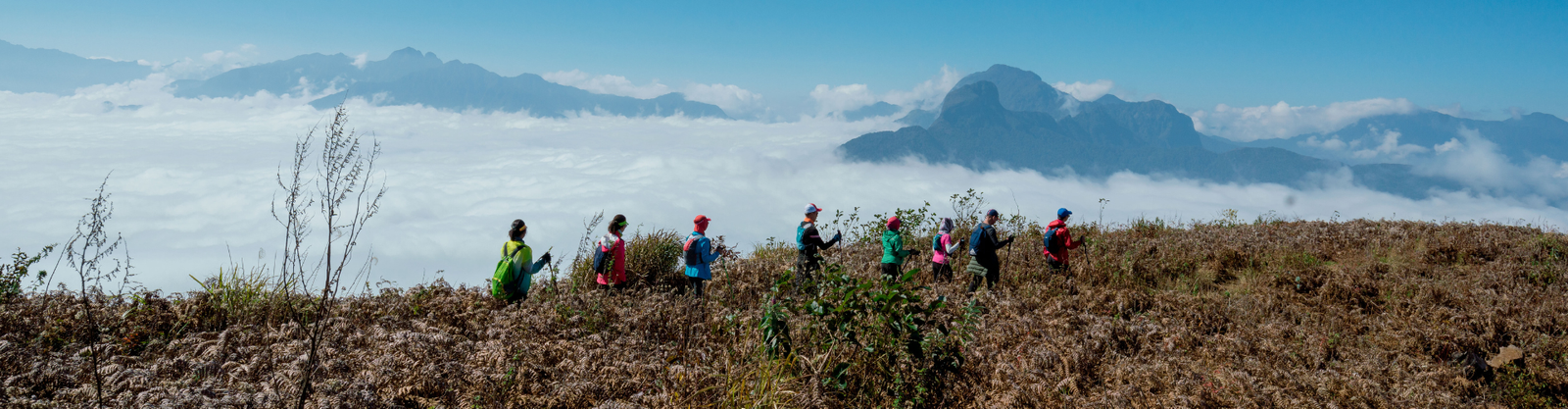
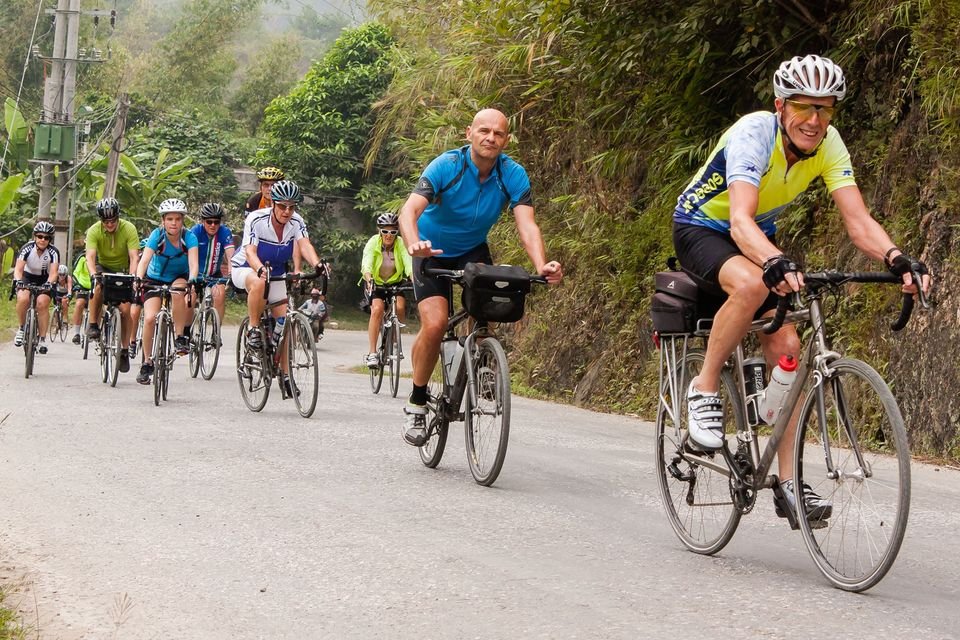
The Ha Giang Loop is often described as the "final frontier" of Vietnam. It is a place where the landscape doesn't just surround you; it confronts you. For adventure seekers, the allure of this UNESCO Global Geopark is undeniable, but for the cyclist, the conversation always begins and ends with one word: elevation. Unlike the flat rice paddies of the Mekong Delta or the rolling hills of the central coast, Ha Giang Loop cycling elevation is a vertical odyssey that demands respect, preparation, and a specific kind of mental fortitude.
In this definitive guide, we break down the mountain passes, the percentage gradients, and the total vertical gain of the "Happiness Road." Whether you are a weekend warrior or a seasoned mountain goat, understanding the topography of the Dong Van Karst Plateau is the first step toward a successful journey. For those who want to tackle these heights with professional support, exploring the cycling tours offered by Golden Trail Travel is the most reliable way to ensure your ascent into the clouds is both safe and spectacular.
.jpg)
When we talk about the Ha Giang Loop cycling elevation, we are discussing one of the most concentrated areas of vertical gain in Southeast Asia. The loop, which covers roughly 350 kilometers, isn't just a circle on a map; it is a pulse-pounding series of ascents and descents that mimic the jagged teeth of the limestone peaks surrounding the road.
For a standard 6-day itinerary, a cyclist can expect a total cumulative elevation gain of between 7,000 and 10,000 meters. To put that in perspective, you are essentially climbing the equivalent of Mount Everest from sea level over the course of a single week. On an average day, you will be climbing between 1,200 and 1,800 meters.
In Ha Giang, "flat" is a myth. The gradients here are notoriously inconsistent. While engineered roads in Europe often maintain a steady 7% or 8%, the roads of the Northern Highlands were built under extreme conditions with limited machinery. It is common to encounter ramps of 12% to 15%, particularly on the "S-curves" and inner-village trails. This means that your gear selection and pacing strategy are more critical here than anywhere else in Vietnam.
To conquer the loop, you must first understand the "big four" obstacles. Each of these passes has a unique personality and elevation profile.
Starting from Ha Giang City at roughly 100m above sea level, the Bac Sum Pass is your first major vertical challenge. It winds upward toward the Quan Ba district, acting as a transition from the tropical lowlands to the high-altitude plateau.
Peak Elevation: ~1,000m
Total Gain: ~900m over 9km
The Experience: It is a rhythmic climb. The switchbacks are tight, and the view looking back at the winding road provides the first real sense of scale for the trip.
This is perhaps the most photographed road in Vietnam. Tham Ma is a short but punchy climb that leads you into the heart of the Dong Van district.
Elevation Gain: ~300m in 5km
The Experience: While the numbers look modest, the Tham Ma Pass is often tackled after a long morning of riding. The nine perfect hairpin turns are a masterpiece of road engineering.
The climax of the Ha Giang Loop cycling elevation story is the Ma Pi Leng. This 20km stretch between Dong Van and Meo Vac is a high-altitude traverse along the edge of the Tu San Canyon.
Peak Elevation: ~1,500m
Vertical Drop: ~800m down to the Nho Que River
The Experience: You aren't just climbing here; you are pedaling along the edge of the world. The exposure is massive, and the wind can be a significant factor. It is the highest point of the "Happiness Road" and the most rewarding view in Southeast Asia.
Located between Meo Vac and Du Gia, the M-shaped road is a series of rolling, high-intensity climbs that mimic the shape of the letter M.
The Experience: This is "death by a thousand cuts" for the legs. Instead of one long climb, you face several short, very steep sections that require explosive power.
To navigate these legendary segments without the burden of heavy luggage, joining one of our guaranteed tours allows you to focus purely on the climb while our support vehicles handle the logistics.
You cannot fight the Ha Giang Loop cycling elevation with standard equipment. Your bike must be tuned specifically for sustained climbing and technical descending.
We recommend a "mountain-specific" gear ratio.
Chainrings: A compact (50/34) or sub-compact (46/30) setup is essential.
Cassette: You will want at least a 34T or 36T rear cog. If you are using a 1x drivetrain (common on gravel and mountain bikes), a 42T or 50T rear cassette is highly recommended.
Why? A high cadence (RPM) protects your knees and allows your cardiovascular system to take the load rather than your muscles. In Ha Giang, "grinding" a heavy gear is a recipe for exhaustion by Day 3.
The descents are just as long as the climbs. Dropping 1,000 meters in 15 minutes puts incredible stress on your braking system.
Disc Brakes: Hydraulic disc brakes are non-negotiable for safety. They provide consistent modulation and don't suffer from "brake fade" like rim brakes.
Cooling: If you are a heavier rider, consider 160mm or 180mm rotors to help dissipate heat on the long drops into Yen Minh or Meo Vac.
High elevation often means changing weather. You might start in the sun at the base and reach the summit in the clouds.
Width: 32mm to 45mm tires provide the necessary contact patch for grip on damp, high-altitude turns.
Pressure: Running a slightly lower pressure (tubeless is best) increases comfort on the rougher concrete patches of the high passes.
At Golden Trail Travel, our cycling tours include premium rental bikes that are specifically equipped with wide-range gearing and high-performance hydraulic brakes to handle these exact conditions.
How do you prepare your body for 8,000 meters of climbing?
Distance is irrelevant in your training; elevation gain is everything.
Hill Repeats: Find a 5-10 minute climb in your area and do it 5 times in a single session.
Sustained Efforts: Practice holding 75-80% of your maximum heart rate for 45-60 minutes, which is the average time for the major passes on the loop.
While 1,500 meters isn't "high altitude" in a mountaineering sense, the air is noticeably thinner than at sea level. Your heart rate will be 5-10 beats higher for the same effort. Learning to manage your breathing and staying below your "red line" is the key to finishing the loop.
There is a unique spiritual payoff to conquering the Ha Giang Loop cycling elevation. When you reach the monument at the top of the Ma Pi Leng, looking down at the emerald thread of the Nho Que River, the sense of accomplishment is profound. You haven't just seen the view; you have earned it with every pedal stroke.
Cycling allows you to feel the temperature change, smell the woodsmoke from Hmong houses, and hear the rhythmic breathing of the mountains. It is a sensory immersion that motorbike travelers simply cannot experience. This is why we are so passionate about our cycling tours; we want you to feel the "Happiness Road" in your soul, not just see it through a visor.
Tackling high-elevation terrain unsupported is a monumental task. Carrying 15kg of gear over 8,000m of climbing is only for the most elite cycle-tourers. For everyone else, there is Golden Trail Travel.
Our guaranteed tours feature a dedicated support van that follows the group.
Luggage Transfer: You cycle with just a light day-bag. We carry the rest.
The "Safety Lift": If a climb becomes too much, or if the weather turns bad on a high pass, you can simply hop in the van and resume riding at the next scenic point.
Nutrition: We provide the high-calorie snacks and electrolytes necessary to fuel a body climbing 1,500 meters a day.
Our guides understand the "rhythm" of the mountains. They know when to push and when to take an extra-long coffee break in a pine forest to let the group's heart rates settle. This expert pacing is the difference between a trip that is "too hard" and a trip that is "the perfect challenge."
The "perceived difficulty" of the elevation changes with the season.
September - November: The best visibility. Dry air makes breathing easier, and the views from the summits are crystalline.
March - May: Moderate temperatures. Ideal for those who don't like the cold of the high passes in winter.
June - August: High humidity. The climbs feel significantly harder due to the heat, making hydration the number one priority.
For a full 350km loop, expect between 7,000m and 10,000m of total vertical gain, depending on the specific village detours taken.
Absolutely! E-mountain bikes are a fantastic way to level the playing field. They allow riders of different fitness levels to enjoy the Ha Giang Loop cycling elevation together without anyone being left behind on the steeper ramps.
Climbs like Bac Sum and the ascent out of Yen Minh are typically 8km to 12km long. They are sustained efforts rather than short bursts.
A 1:1 gear ratio is the minimum (e.g., 34T front chainring and 34T rear cassette). A "granny gear" where the rear cog is larger than the front chainring is even better for the 15% gradients.
On a Golden Trail Travel tour, our support van is always behind you. You can hop in at any time to skip a section and join the group for the descent or the next flat stretch.
"I've cycled in the Alps and the Pyrenees, but the verticality of Ha Giang is something else entirely. The Ma Pi Leng Pass is truly the King of Passes. Golden Trail Travel’s support was world-class, allowing me to focus on the views rather than my luggage." — Mark S., United Kingdom
"The climb up Bac Sum was my 'wake up call.' I'm glad I had the wide-range gears recommended by Golden Trail. The sense of achievement reaching Heaven's Gate was incredible!" — Elena R., Italy
"If you love climbing, this is paradise. Every turn is a postcard. The team at Golden Trail Travel knows these mountains better than anyone. I highly recommend their guaranteed tours." — Thomas H., Australia
The Ha Giang Loop cycling elevation is a formidable opponent, but with the right gear, the right training, and the right support, it is an obstacle that can be turned into a triumph. It is a journey that asks much of your body but gives back ten-fold in memories and spiritual growth. As you stand atop the Ma Pi Leng, looking out over the endless waves of limestone, you will realize that the "struggle" was the most beautiful part of the story.
Are you ready to scale the sky? Visit Golden Trail Travel today to explore our cycling tours or book your spot on our next guaranteed tours. Let us guide you to the roof of Vietnam.

.jpg "The Epic Cycling Adventure: Rediscovering Your Soul on Two Wheels")
.jpg "The Ultimate Trekking Expedition: A Journey Beyond Boundaries")
.jpg "The Ultimate Guide to Trekking Cao Bang Vietnam: Journey Through the Realm of Mountains and Waterfalls")
.webp "Cuc Phuong National Park Day Trip")
.jpg "Pu Luong Nature Reserve: An Ethereal Journey into Vietnam’s Hidden Eden")